Whey Permeate Powder:
A Complete Guide + Comparison with Other Whey Ingredients (1200+ Words)
Whey permeate powder is one of the most misunderstood yet strategically important dairy ingredients in the global food and beverage industry. Often overlooked in favor of more familiar whey fractions like whey protein concentrate (WPC) and whey protein isolate (WPI), whey permeate plays a unique functional and economic role that makes it indispensable in many industrial applications.
In this article, we’ll explain what whey permeate powder really is, how it’s produced, where it’s used, its nutritional and functional characteristics, and how it compares to other whey ingredients. Whether you’re a technical buyer, product developer, or brand owner in the food industry, this guide will help you understand whey permeate from a market-driven and real-world perspective.
What Is Whey Permeate Powder?
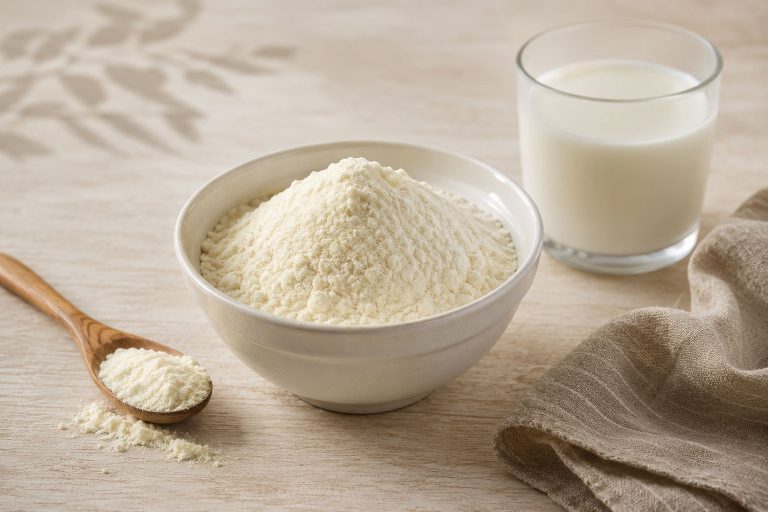
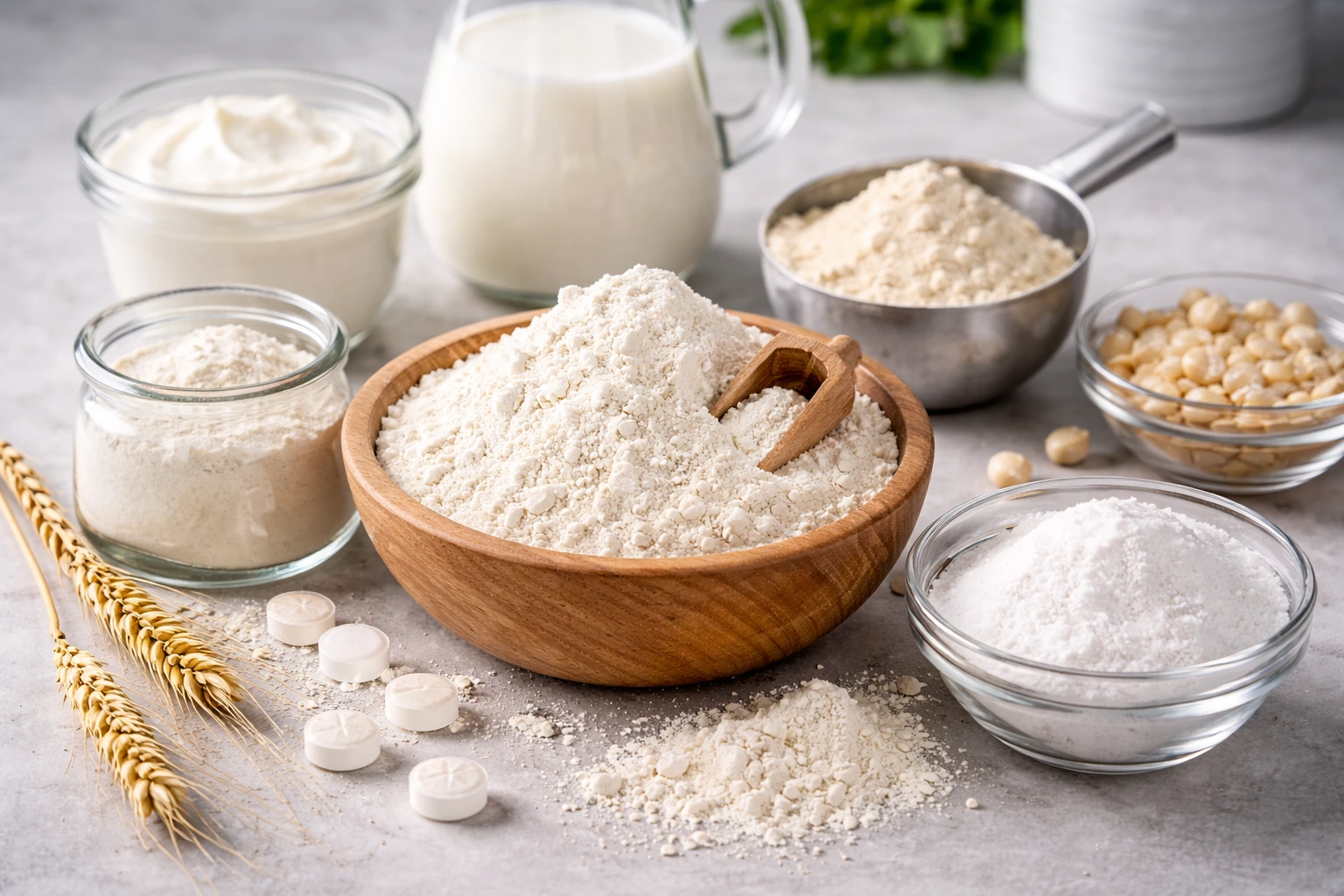
Whey permeate powder is a dairy ingredient obtained during the processing of liquid whey when proteins are removed through membrane filtration (such as ultrafiltration). After whey proteins (which become WPC or WPI) are separated, the remaining liquid — containing lactose, minerals, and trace amounts of non-protein components — is dried to produce whey permeate powder.
Unlike whey protein ingredients, whey permeate is not a significant source of protein. In fact, its protein content is very low (often < 10%) because most proteins have been retained in the protein concentrates. Instead, permeate is primarily composed of:
- Lactose
- Minerals
- Water-soluble components of whey
This composition gives whey permeate unique properties and uses.
How Whey Permeate Powder Is Produced
The production of whey permeate involves several stages:
- Cheese Production – Liquid whey is generated as a by-product.
- Membrane Filtration – Whey is passed through filters that retain proteins (for WPC/WPI), allowing smaller molecules — lactose, minerals — to pass through as permeate.
- Concentration – The permeate stream is concentrated (often by evaporation).
- Spray Drying – The concentrated permeate is dried to produce a powder.
This process ensures that whey permeate retains valuable lactose and minerals while being low in protein.
Functional Characteristics of Whey Permeate Powder
Whey permeate powder has several functional and economic characteristics that make it valuable:
1. Flavor and Sweetness
Lactose is mildly sweet and contributes to the overall flavor profile. Permeate powder enhances:
- Sweetness in dry mixes
- Mouthfeel in dairy beverages
- Balanced flavor without dominating dairy notes
2. Solubility
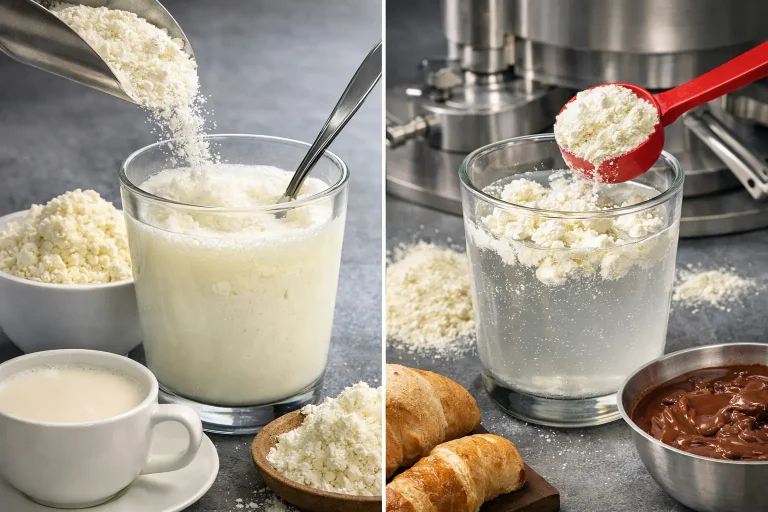
Due to its composition, whey permeate dissolves readily in water and other liquid systems. This makes it useful in:
- Beverage formulations
- Recombined dairy products
- Powder blends
3. Carbohydrate Source
Whey permeate is a cost-effective source of carbohydrates, particularly lactose, which can:
- Provide energy in nutritional products
- Support browning reactions in bakery applications
4. Mineral Content
The minerals in permeate (calcium, phosphorus, potassium) can contribute to:
- Ionic balance
- Flavor and functionality
- Nutritional labeling claims
5. Economic Advantage
Since permeate contains fewer proteins and therefore lower manufacturing costs, it’s often more affordable than other whey fractions. Many manufacturers use it to:
- Reduce raw material costs
- Maintain functionality
- Avoid compromising product quality
Common Uses of Whey Permeate Powder
Whey permeate powder has diverse industrial applications due to its functional and cost characteristics.
1. Dairy and Beverage Powders
- Recombined milk and UHT beverages
- RTD powdered drinks
- Nutritional beverages (as carbohydrate balance)
2. Bakery and Confectionery
- Bakery mixes as a lactose-rich ingredient
- Confectionery bases for sweetness and structure
- Bread and pastry formulations to improve color, texture
3. Infant and Nutrition Products
Even though it’s not high in protein, permeate can help formulate balanced carbohydrate profiles in:
- Infant nutrition (combined with other proteins)
- Clinical nutrition products
- Elderly nutrition formulas
4. Ice Cream and Frozen Desserts
Whey permeate can help with:
- Texture and sweetness
- Freezing point depression
- Creaminess when formula is balanced properly
Whey Permeate vs. Other Whey Ingredients
To understand the real position of whey permeate, it’s essential to compare it with other whey fractions commonly used in food formulation.
| Feature/Function | Whey Permeate | Whey Protein Concentrate (WPC) | Whey Protein Isolate (WPI) | Milk Protein Concentrate (MPC) |
|---|---|---|---|---|
| Protein Content | Low (<10%) | Moderate (35–80%) | High (>90%) | High (40–85%) |
| Lactose Content | High | Moderate | Low | Low |
| Solubility | High | High | Very High | Moderate |
| Sweetness | Mild | Low | Low | Low |
| Functional Use | Carbohydrate/mineral source | Balanced protein | High protein nutrition | Balanced protein with casein & whey |
| Cost | Low / cost-saving | Mid | High | High |
| Typical Applications | Carbohydrate enrichment, mixes | Sports & nutrition | Premium nutrition | Balanced dairy structure |
Market Position and Why It Matters
🔹 Whey Permeate Is Not a Protein Ingredient
Many buyers new to dairy ingredients mistakenly assume all whey fractions are primarily protein sources. Whey permeate disproves that assumption. Its value is not in high protein, but in lactose and mineral content, solubility, flavor, and affordability. This distinction is crucial for formulators.
🔹 Cost Efficiency in Large-Scale Production
In high-volume industrial settings (bakery mixes, powdered beverages, recombined dairy), reducing raw material cost without sacrificing functionality is a priority. Whey permeate can be blended with higher-cost ingredients (like WPC or MPC) to achieve a balanced formulation while managing cost-per-unit.
🔹 Formulation Balance
Rather than using pure lactose (which can be too sweet and difficult to handle), whey permeate offers a natural dairy-based carbohydrate source that behaves more predictably in industrial processes.
Practical Formulation Examples
Example 1: Powdered Beverage Mix
A beverage product designed for cold reconstitution may use:
- Whey permeate – for lactose and minerals
- Instant WMP – for dairy taste
- WPC – for added protein
- Stabilizers and emulsifiers
Permeate ensures better sweetness balance and solubility while keeping cost down.
Example 2: Bakery Mix
In a premium bread mix:
- Whey permeate provides lactose for crust browning
- MPC increases protein and structure
- Enzymes and dough conditioners improve handling
The result: better color, softer crumb, controlled protein levels, and predictable processing.
Example 3: Nutrition Shake
For a balanced nutritional shake:
- WPI for rapid protein delivery
- Whey permeate as carbohydrate energy source
- Flavor and stabilizers
This formulation provides fast protein release, sustained energy, and smooth mouthfeel.
Quality Considerations
When sourcing whey permeate, industry buyers should check:
- Lactose content
- Mineral profile
- Solubility index
- Moisture content
- Microbiological standards
Because whey permeate has low protein, contamination or poor dehydration practices can affect powder flow, sweetness, and stability.
Working with a reliable supplier that provides complete COA (Certificate of Analysis) and TDS (Technical Data Sheet) is crucial — especially in export markets.
Regulatory and Clean-Label Considerations
Whey permeate is generally considered a clean-label dairy ingredient in most markets because it is derived from milk whey and does not undergo excessive processing. However, formulators should:
- Clarify labeling standards in target markets
- Avoid mixing with artificial additives if aiming for “clean label” claims
- Position permeate as a dairy carbohydrate/mineral source rather than a protein
Challenges and Solutions
❗ Challenge: Non-Protein Nature
Some customers may mistakenly expect it to function like a protein ingredient.
Solution: Clear documentation and formulation guidance that positions permeate correctly.
❗ Challenge: Sensory Perception
High lactose content may make products taste sweeter than expected.
Solution: Combine with other ingredients (e.g., WPC, milk powder) and adjust flavor systems accordingly.
❗ Challenge: Solubility Variability
If not instantized or dried properly, permeate can show clumping.
Solution: Use permeate with proper particle engineering or agglomeration.
Final Takeaways
Whey permeate powder is often underrated, but it plays a strategic role in modern food and beverage formulation. It is not a protein ingredient like WPC or WPI, nor a balanced protein source like MPC, but it serves as a cost-effective, highly soluble carbohydrate and mineral source with broad industrial applications.
Understanding whey permeate and its differences from other whey fractions enables formulators to create products that are:
- Cost-effective
- Functionally balanced
- Process-friendly
- Fit for target markets
Today’s competitive food landscape rewards not just good ingredients, but smart formulation decisions — and whey permeate is a prime example of an ingredient that delivers both functional value and cost advantage when used effectively.