Instant vs Non-Instant Milk Powder
The difference between instant and non-instant milk powder is physical, not nutritional, and it decides which one belongs on your production line. Milk powder is one of the most widely traded dairy ingredients because it stores well, ships easily and works in almost every food category. But two powders made from the same milk can behave very differently in the mixing tank. Instant milk powder is agglomerated so it dissolves in cold water with simple stirring. Non-instant (regular) milk powder is fine and dense, and it needs proper mixing to dissolve. For a manufacturer, the right choice affects mixing time, packaging volume, cost per tonne and the texture of the final product. This guide explains how both types are made, how they behave and how to choose between them.
What Is Milk Powder?
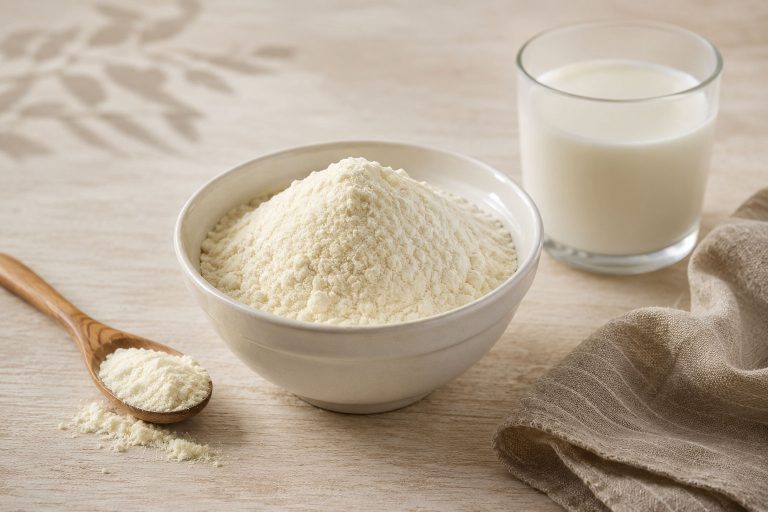
Milk powder is made by removing most of the water from liquid milk through evaporation and spray drying. The result is a dry, shelf-stable ingredient that keeps the proteins, lactose, minerals and, depending on the type, the milk fat.
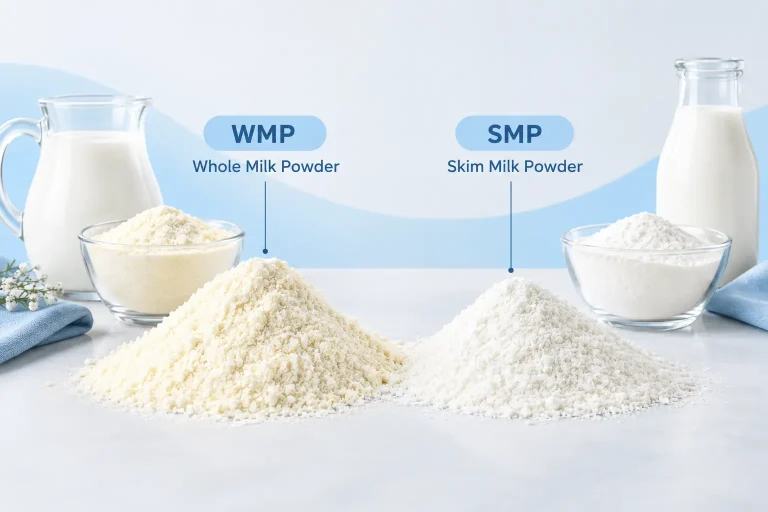
The most common types are whole milk powder (WMP), skim milk powder (SMP), dairy whitener and fortified milk powder. Both instant and non-instant versions can be made from whole or skim milk. If you are comparing milk powder with other dairy powders such as MPC and WPC, read our complete guide to buying milk powder, MPC and WPC.
What Is Non-Instant Milk Powder?
Non-instant milk powder, also called regular milk powder, is produced by standard spray drying without an agglomeration step. The particles are fine, uniform and dense, with a higher bulk density than instant powder.
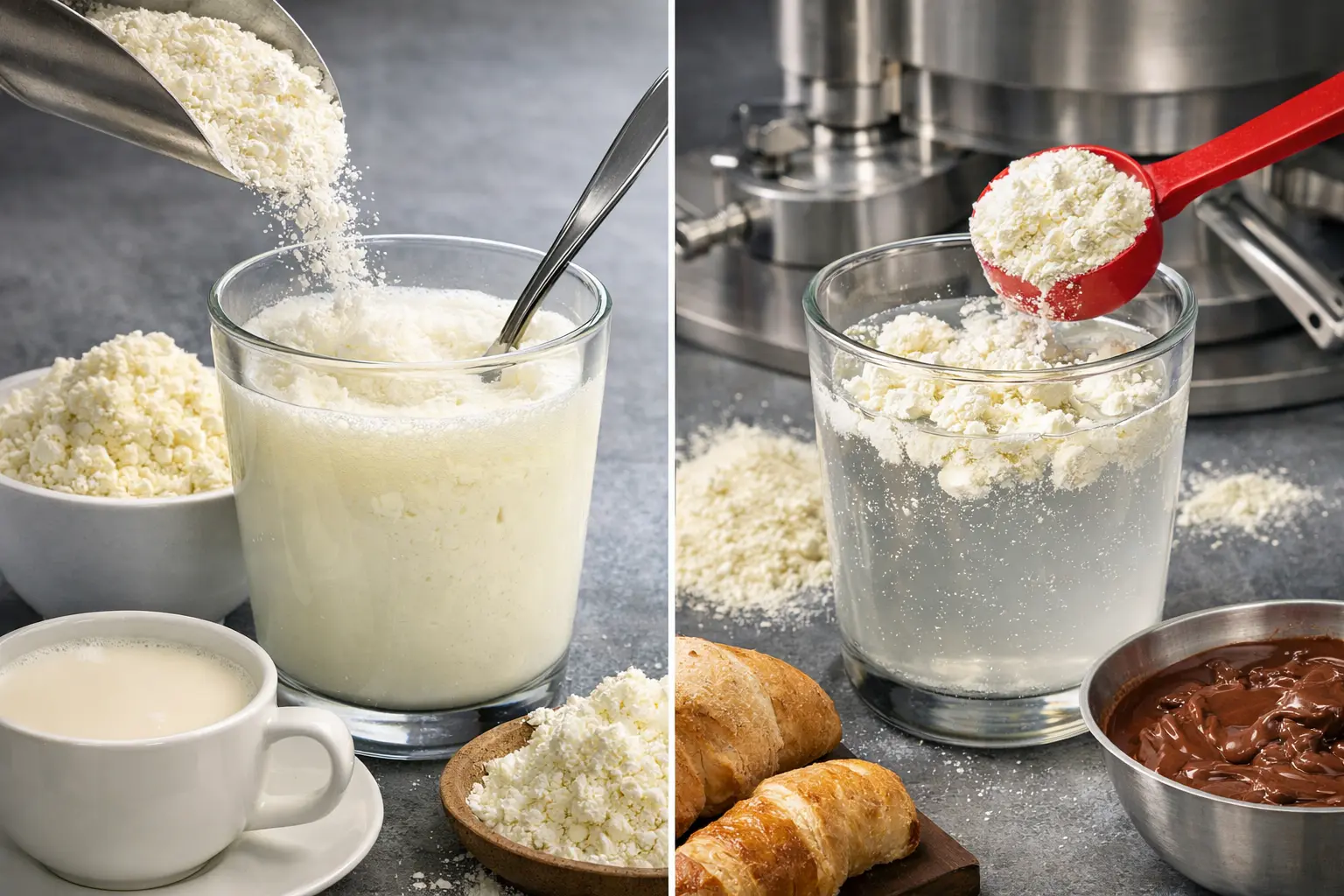
These small, dense particles wet slowly. When the powder is poured into cold water, it tends to float and form lumps instead of dissolving. Good dissolution needs warm water, a high-shear mixer or mechanical agitation. This is not a problem in a factory, where industrial mixers are standard, which is why non-instant powder is the usual choice for large-scale processing.
What Is Instant Milk Powder?
Instant milk powder goes through an additional agglomeration step. Small powder particles are bonded into larger, porous clusters. Water enters this open structure quickly, so the powder wets fast, disperses evenly and dissolves in cold water with simple stirring and almost no lumps. The clusters have a lower bulk density, so the same weight of powder takes more space.
Instant whole milk powder is often lecithinated as well: a small amount of lecithin is applied to the fat-rich particle surface so the fat does not repel water. If your product needs this treatment, confirm it with your supplier, because it must appear on the label and the specification.
How the Production Processes Differ
Both types start the same way: milk standardization, pasteurization, evaporation to concentrate the solids, and spray drying. The difference comes after drying.
In the non-instant process, the powder is cooled and packed. In the instant process, the fine powder is lightly rewetted so the particles stick together, then agglomerated in a fluid bed with airflow, re-dried, cooled and packed. Many modern spray dryers also agglomerate inside the drying system itself. Either way, the extra steps need more energy and specialized equipment, which is the main reason instant powder costs more.
Functional Properties Compared
Particle structure and bulk density. Instant powder has larger, porous particles and a lower bulk density. Non-instant powder has fine, compact particles and a higher bulk density, which means more product per bag, pallet and container.
Wettability and dispersibility. Wettability is how quickly the powder takes up water. Dispersibility is how evenly it spreads without clumping. Instant powder is excellent on both. Non-instant powder is moderate to slow on wettability and floats on the surface if it is not mixed vigorously.
Solubility. Instant powder dissolves fast even in cold water. Non-instant powder may need warm water or longer mixing to reach full solubility.
Flowability. Agglomerated powder usually flows better on packaging lines because of its particle size distribution. Non-instant powder packs more densely in storage.
Nutrition. Agglomeration does not change the composition in any meaningful way. Both types contain the same milk proteins (casein and whey), lactose, calcium and, in whole milk powder, milk fat, plus added vitamins if the product is fortified.
Where Each Type Is Used
Instant milk powder suits products where the powder is dissolved without industrial mixing or where speed matters:
- Retail packs and household reconstituted milk
- Vending machines and coffee or tea whitening
- Institutional catering and emergency food supply
- Ready-to-mix beverage formulations
Non-instant milk powder suits factories with high-speed mixers, where dissolution is not a concern:
- Chocolate and confectionery
- Bakery products
- Ice cream
- Processed cheese
- Yogurt and recombined dairy beverages
In these plants the mixer does the work that agglomeration would otherwise do, so paying for instant powder adds cost without adding performance.
Which One Should You Choose?
The choice depends on your application, not on nutrition. If your product is sold to consumers or dissolved by hand, instant milk powder is the right choice. If you process it in an industrial plant with mechanical mixing, non-instant powder is the more economical choice.
Before you decide, check five things: the mixing system you have, how fully and how fast the powder must dissolve, your cost sensitivity, your packaging format and the texture you expect in the finished product. Lower bulk density also means more packaging volume per tonne, so include freight and storage space in the comparison, not only the price per kilogram.
Buyer’s Checklist for Industrial Purchasing
Before ordering any milk powder, ask the supplier for:
- The type: whole, skim or fortified, and instant or non-instant
- A technical data sheet (TDS) and a certificate of analysis (COA) for every batch
- Moisture content and insolubility index
- Bulk density
- Scorched particle content
- Microbiological results
- For instant powder, wettability and dispersibility results
- Lecithin declaration, if the powder is lecithinated
- Packaging type, storage conditions and shelf life
- Export documents and minimum order quantity
Wettability and dispersibility are the two tests that matter most for instant powder, so do not accept an instant grade without them.
Need a specification sheet or a quote for milk powder or other dairy powders? Send an inquiry with the type, monthly volume and your application, and our team will recommend a suitable grade.
Storage and Shelf Life
Both types should be stored below 25°C, in a low-humidity place, protected from light and oxygen. Shelf life typically ranges from 12 to 24 months, depending on the fat content and the packaging. Whole milk powder is more sensitive to oxidation because of its fat, while skim milk powder is generally more stable. Instant powder, with its open porous structure, takes up moisture more easily, so keep the bags sealed until use.
Cost Considerations
Instant milk powder usually costs slightly more because it needs extra processing steps, more energy and specialized equipment. Its lower bulk density also raises packaging and freight cost per tonne. Non-instant powder is more cost-efficient for bulk industrial buyers. The higher price of instant powder is justified when convenience is part of the product you sell.
Advantages and Limits at a Glance
Instant milk powder gives quick dissolution, easy preparation and better dispersibility, but it costs slightly more and has a lower bulk density, which means a larger packaging volume. Non-instant milk powder is more economical, has a higher bulk density and works well with industrial mixing, but it dissolves more slowly and can form lumps in cold water.
Market Trends
In developing markets, demand for instant milk powder is rising with consumer convenience, ready-to-drink beverages and online grocery sales. Non-instant powder stays dominant in industrial dairy processing, confectionery and large-scale food production, and it continues to drive the volume of global dairy trade.
Frequently Asked Questions
Is instant milk powder different from non-instant in nutrition? No. Both are made from the same milk, and agglomeration does not change the composition in any meaningful way. The difference is in structure and how the powder dissolves.
Why does instant milk powder cost more? It needs extra processing steps and specialized equipment, uses more energy and has a lower bulk density, which raises packaging and freight cost.
Can I use instant milk powder in industrial production? Yes, but in plants with high-speed mixers non-instant powder performs the same at a lower cost, so instant powder is usually not worth the extra price there.
Which tests matter most for instant milk powder? Wettability and dispersibility, in addition to the standard parameters: moisture, insolubility index, bulk density, scorched particle content and microbiological safety.
What documents should I ask a supplier for? A TDS, a COA for each batch, microbiological results, packaging details and export documents.
Conclusion
Instant and non-instant milk powders come from the same raw material but serve different purposes. Instant milk powder gives superior wettability, fast dispersion and convenience for direct consumption. Non-instant milk powder gives economic advantages and high-density storage for industrial use. The difference lies in structure and functionality, not in nutrition, so the right choice comes from your process, your product and your cost target. Check the TDS and COA before every purchase.
For prices, specifications and available grades of milk powder and other dairy ingredients, request a quote or contact our sales team.