How Iran Became a Key Player in the Global Milk Powder Market
For many years, the global milk powder market was dominated by traditional exporters such as New Zealand, the European Union, and the United States. However, over the past decade, Iran has emerged as an influential regional producer and a growing exporter, especially in Middle Eastern, CIS, and Asian markets. This transformation did not happen overnight. It has been the result of targeted investments, agricultural policy reforms, rising domestic production, and strategic positioning within the region.
This article explores how Iran became a key player in the global milk powder industry, the factors behind its growth, and the opportunities the country now offers to international buyers and partners.
A Rapidly Rising Dairy Production Capacity
One of the main reasons behind Iran’s growing influence is the remarkable expansion of its dairy production capacity. Iran has one of the largest livestock populations in the region, with millions of dairy cattle producing a steady supply of raw milk year-round. Over the last decade, the country has significantly modernized its dairy farms, adopting better genetics, advanced feeding systems, and automated milking technologies.
As a result, Iran’s annual milk production has reached several million tons, placing it among the top producers in Asia. This sustained growth has created:
- A strong supply of raw milk for conversion to milk powder
- Excess production beyond domestic consumption, supporting exports
- Competitive pricing for industrial food manufacturers
The combination of natural resources, farming modernization, and an expanding processing industry has helped Iran develop a stable and reliable milk powder supply chain.
Government Support and Strategic Agricultural Policies
The Iranian government has played a crucial role in developing the dairy sector. Over the past years, authorities have introduced policies to support:
- Modern livestock farm development
- Increased production of raw milk
- Investment incentives for dairy processing factories
- Subsidized feed and veterinary services for farmers
- Export support programs for dairy products
These policies encouraged major Iranian dairy companies to expand their processing capacities and invest heavily in spray-drying lines, filtration technologies, and advanced production equipment.
Today, Iran hosts a large number of industrial factories capable of producing:
- Instant Skimmed milk powder (Instant SMP)
- Whey powder
- Permeate whey powder
- Milk protein concentrate (MPC)
The government’s consistent support has strengthened Iran’s competitive edge in the global dairy ingredients market.
Strategic Geographic Advantage for Exports
Iran’s location makes it a natural hub for exporting dairy ingredients. With access to major trade routes and proximity to high-consumption regions, Iran can efficiently supply:
- Middle East & Persian Gulf Countries
- Central Asia and the CIS Zone (Azerbaijan, Armenia, Kazakhstan)
- South Asia (Afghanistan, Pakistan)
- North Africa
Shipping times are significantly shorter than from New Zealand or Europe, which gives Iran a strong logistical advantage.
For many food manufacturers in neighboring countries, Iranian milk powder is preferred because:
- It arrives faster
- It is often more competitively priced
- Quality standards are consistent
- Transportation costs are lower
This geographic strength has positioned Iran as a regional dairy powerhouse.
Competitive Pricing with Global Standards
One of the major reasons global buyers are turning to Iran is its ability to offer high-quality milk powder at competitive prices. Unlike highly industrialized dairy markets, Iran benefits from lower production and labor costs while maintaining robust quality control systems.
Many Iranian producers follow international food safety standards, including:
- ISO 22000
- HACCP
- GMP
- Halal Certification
This combination of reasonable pricing and internationally accepted quality has helped Iran gain trust in global markets.
Investment in Advanced Dairy Processing Technology
Iranian dairy companies have heavily invested in modern production lines, enabling them to manufacture milk powder with consistent quality for industrial use. These technologies include:
- High-capacity spray dryers
- Ultrafiltration systems for MPC/WPC production
- Evaporation and standardization units
- Advanced packaging machinery
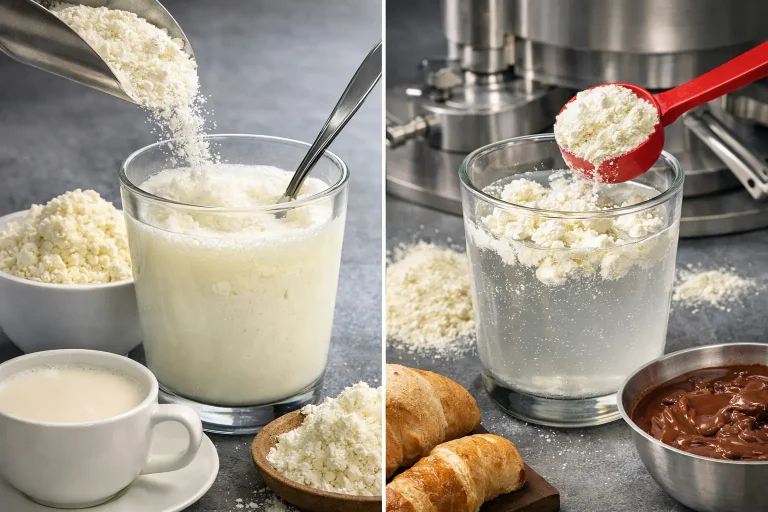
With these upgrades, Iran has shifted from producing mainly consumer-grade milk powder to manufacturing specialized functional dairy ingredients used in:
- Bakery and confectionery
- Dairy beverages
- Ice cream production
- Chocolate and sweets
- Nutritional supplements
This shift toward value-added dairy ingredients has positioned Iran as a competitive alternative to global suppliers.
Growing Demand from Regional Food Industries
The Middle East and Central Asia have seen fast growth in:
- Bakery factories
- Chocolate and confectionery industries
- Ice cream and dessert manufacturers
- Beverage and dairy drink companies
These industries rely heavily on milk powder, whey protein, and MPC/WPC. With rising food production in these regions, demand for dairy ingredients has increased.
Because Iran is geographically close and offers reliable supply with shorter lead times, many of these manufacturers consider Iran a primary sourcing destination.
Diversification of Export Markets
Iranian dairy producers are no longer limited to nearby markets. Over the past few years, exports have expanded to:
- East Asia
- Africa
- Russia
- South America (limited but growing)
This diversification has allowed Iranian companies to increase production volumes while reducing dependence on any single region.
As trade channels continue to grow, Iran’s reputation in the global milk powder market strengthens.
Strong Domestic Brands Entering Global Competition
Large Iranian dairy manufacturers such as:
- Shahdoosh
- Kaleh
- Pegah
- Mihan
- Other private factories in Yazd, Isfahan, Tehran, Khorasan, and Tabriz
have invested in R&D and quality consistency. These brands now successfully compete with well-known international suppliers.
Their focus on purity, freshness, protein levels, solubility, and controlled microbiological standards has elevated the global image of Iranian dairy products.
A Growing Reputation for Reliability
Global food manufacturers value stability, and Iranian suppliers have demonstrated:
- Consistent monthly production
- Fresh production cycles
- Strong packaging and transport standards
- Transparent COA documentation
- Responsive export departments
- Flexible order quantities
During periods when international markets faced disruptions—such as global supply chain issues—Iran maintained stable supply, further boosting its reputation.
Challenges That Iran Has Successfully Overcome
Despite the progress, Iran had challenges such as:
- Fluctuating domestic milk prices
- High feed costs
- Periodic export regulations
- Currency volatility
However, the industry adapted through:
- More efficient farm management
- Increased large-scale factory farming
- Expansion of domestic feed production
- Improved export strategies
These solutions have stabilized Iran’s market and increased investor confidence.
Looking Ahead: Iran’s Future in the Global Dairy Ingredients Market
Iran is positioned to become an even larger player as global demand for milk powder continues to rise. Key future strengths include:
- Expansion of spray-drying capacity
- Growth of high-protein dairy ingredients (MPC, WPC)
- Increased export partnerships with Asian and African markets
- Rising global demand for competitively priced milk powder
With ongoing modernization and a young, skilled workforce, Iran is expected to remain a strong and reliable source for milk powder and dairy ingredients in the coming decade.
Conclusion
Iran’s rise as a key player in the global milk powder market is the result of multiple factors working together: high production capacity, government support, strategic location, advanced processing technologies, and increasing demand from regional industries. These strengths have transformed Iran from a regional supplier into a globally competitive dairy ingredient exporter.
As food industries worldwide seek reliable and cost-effective dairy suppliers, Iran is now recognized as an important and emerging force shaping the future of the milk powder market.