Whey Protein vs Casein Protein: Which One Is Better for You?
Protein plays a vital role in muscle growth, metabolic health, immune support, and overall physical performance. Among all dietary protein sources, whey protein and casein protein remain the most researched and widely consumed dairy-based proteins worldwide. Although both originate from milk, their physiological behavior in the human body differs significantly.
Because of these differences, whey protein and casein protein serve distinct nutritional purposes rather than competing directly. Therefore, understanding how each protein works is essential for making the right choice based on individual goals, lifestyle, and timing.
This article provides a science-backed, practical comparison of whey protein vs casein protein, helping you decide which one fits your needs best.
Understanding Milk Proteins: The Foundation of Whey and Casein
Milk naturally contains two primary protein fractions. On one hand, casein protein accounts for approximately 80% of total milk protein. On the other hand, whey protein makes up the remaining 20%.
During cheese production, milk undergoes enzymatic coagulation. As a result, casein proteins form the curd, while whey proteins remain in the liquid phase. Consequently, each protein develops unique structural and functional properties.
This separation process explains why whey and casein behave differently in digestion, absorption, and muscle metabolism.
What Is Whey Protein?
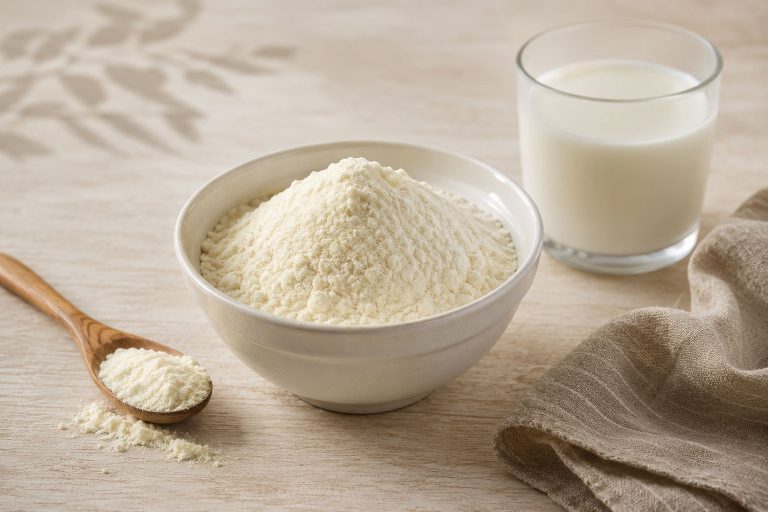
Whey protein is a fast-absorbing, highly bioavailable protein derived from liquid whey after cheese production. Through filtration and drying processes, whey protein is commonly produced in several forms:
-
Whey Protein Concentrate (WPC)
-
Whey Protein Isolate (WPI)
-
Whey Protein Hydrolysate (WPH)
Key Characteristics of Whey Protein
-
Rapid digestion and absorption
-
High essential amino acid content
-
Rich leucine concentration
-
Strong stimulation of muscle protein synthesis
-
Excellent solubility and light texture
Because of these characteristics, whey protein is often described as a “fast protein.” Moreover, its quick absorption makes it particularly effective around physical activity.
What Is Casein Protein?
Casein protein represents the slow-digesting fraction of milk protein. Unlike whey, casein forms a gel-like structure in the stomach. Consequently, this slows gastric emptying and amino acid release.
Common forms of casein include:
-
Micellar casein
-
Calcium caseinate
-
Sodium caseinate
Key Characteristics of Casein Protein
-
Slow and sustained digestion
-
Gradual amino acid release over several hours
-
Strong anti-catabolic properties
-
Higher satiety effect
-
Thicker texture in food formulations
For this reason, casein is frequently referred to as a “time-release protein.”
Digestion Speed: A Critical Difference
One of the most important distinctions between whey and casein lies in digestion speed.
Whey Protein Digestion
Whey protein is digested rapidly, usually within 30 to 90 minutes. As a result, blood amino acid levels rise quickly, which strongly stimulates muscle protein synthesis. Therefore, whey protein is ideal when immediate recovery is required.
Casein Protein Digestion
In contrast, casein protein digests slowly, releasing amino acids steadily for up to 6–8 hours. Consequently, it helps prevent muscle protein breakdown during long fasting periods.
Scientific research clearly shows that digestion speed directly affects protein utilization and muscle metabolism.
Muscle Growth vs Muscle Preservation
Whey Protein and Muscle Growth
Numerous studies confirm that whey protein is highly effective for muscle growth. This advantage exists because whey:
-
Contains more leucine
-
Is absorbed rapidly
-
Activates anabolic signaling pathways efficiently
As a result, whey protein is considered the gold standard for post-workout nutrition.
Casein Protein and Muscle Preservation
Meanwhile, casein protein excels at reducing muscle breakdown. Research shows that consuming casein before sleep significantly lowers overnight muscle protein loss compared to whey.
Therefore, while whey builds muscle quickly, casein protects existing muscle mass over time.
Satiety, Weight Control, and Fat Loss
Protein intake strongly influences appetite and energy balance. However, whey and casein affect satiety differently.
Casein and Appetite Control
Because casein digests slowly, it increases feelings of fullness for longer periods. Consequently, it helps reduce snacking and calorie intake. For this reason, casein is often recommended during weight-management programs.
Whey and Metabolic Support
Whey protein, however, supports fat loss indirectly by preserving lean muscle mass. Additionally, it improves insulin response and enhances post-exercise energy expenditure.
Therefore, whey is commonly used around workouts, while casein supports appetite control throughout the day.
Amino Acid Profile and Nutritional Quality
Both whey and casein are complete proteins, meaning they provide all essential amino acids. However, their amino acid delivery differs.
| Feature | Whey Protein | Casein Protein |
|---|---|---|
| Leucine content | Higher | Moderate |
| Absorption speed | Fast | Slow |
| Muscle protein synthesis | Rapid | Sustained |
| Anti-catabolic effect | Moderate | Strong |
Thus, neither protein is nutritionally superior overall. Instead, each one fulfills a different biological role.
Digestibility and Lactose Sensitivity
Whey Protein
Whey protein isolate contains minimal lactose. Therefore, it is usually well tolerated by individuals with mild lactose sensitivity. Additionally, its rapid digestion reduces gastrointestinal discomfort.
Casein Protein
Casein contains low lactose as well. However, due to its slow digestion, some individuals may experience bloating. Consequently, people with sensitive digestion often prefer whey isolate.
Optimal Timing for Each Protein
Best Timing for Whey Protein
-
Immediately after workouts
-
In the morning after fasting
-
Between meals when fast protein is required
Best Timing for Casein Protein
-
Before bedtime
-
During long gaps between meals
-
As a meal replacement protein
Therefore, timing plays a crucial role in maximizing protein effectiveness.
Whey vs Casein in the Food Industry
Beyond personal nutrition, whey and casein are critical functional ingredients in food manufacturing.
Whey Protein Applications
-
Protein beverages
-
Sports nutrition products
-
Bakery items
-
Dairy drinks
-
Medical nutrition
Casein Protein Applications
-
Cheese analogs
-
Creamers and sauces
-
Protein bars
-
Desserts
-
Processed foods requiring texture stability
As a result, whey provides flexibility and nutrition, while casein delivers structure and consistency.
Research-Based Verdict: Which One Is Better?
There is no universal winner. Instead, the better protein depends entirely on individual goals.
Whey Protein Is Better If:
-
Fast recovery is required
-
Muscle growth is the priority
-
Training frequency is high
Casein Protein Is Better If:
-
Long-term muscle preservation is needed
-
Appetite control is important
-
Extended nutrition support is required
Interestingly, many studies suggest that combining whey and casein offers the most complete protein strategy.
Final Conclusion
Whey protein and casein protein should not be viewed as competitors. Instead, they are complementary dairy proteins with distinct physiological roles. Whey supports rapid muscle recovery and growth, while casein protects muscle mass and promotes satiety over time.
Ultimately, the best protein choice depends on timing, goals, and lifestyle. By understanding these differences, consumers and food manufacturers alike can make smarter, research-driven decisions.
In practice, choosing the right protein is not about preference—it is about purpose.