The Heat Treatment of Skim Milk Powder (SMP)
How Processing Conditions Define Functionality, Solubility, and Protein Quality
Skim Milk Powder (SMP) is one of the most widely used dairy ingredients in the global food industry. Although it may appear to be a simple dehydrated milk product, its functional behavior is largely determined by heat treatment during processing. In fact, the way skim milk is heated before spray drying directly affects protein quality, solubility, water-binding capacity, and final application performance.
For this reason, understanding heat treatment classification in Skim Milk Powder is essential for food manufacturers, formulators, and industrial buyers. This article explains how heat treatment works, why it matters, and how Low Heat, Medium Heat, and High Heat SMP differ in real industrial use.
1. What Is Heat Treatment in Skim Milk Powder?
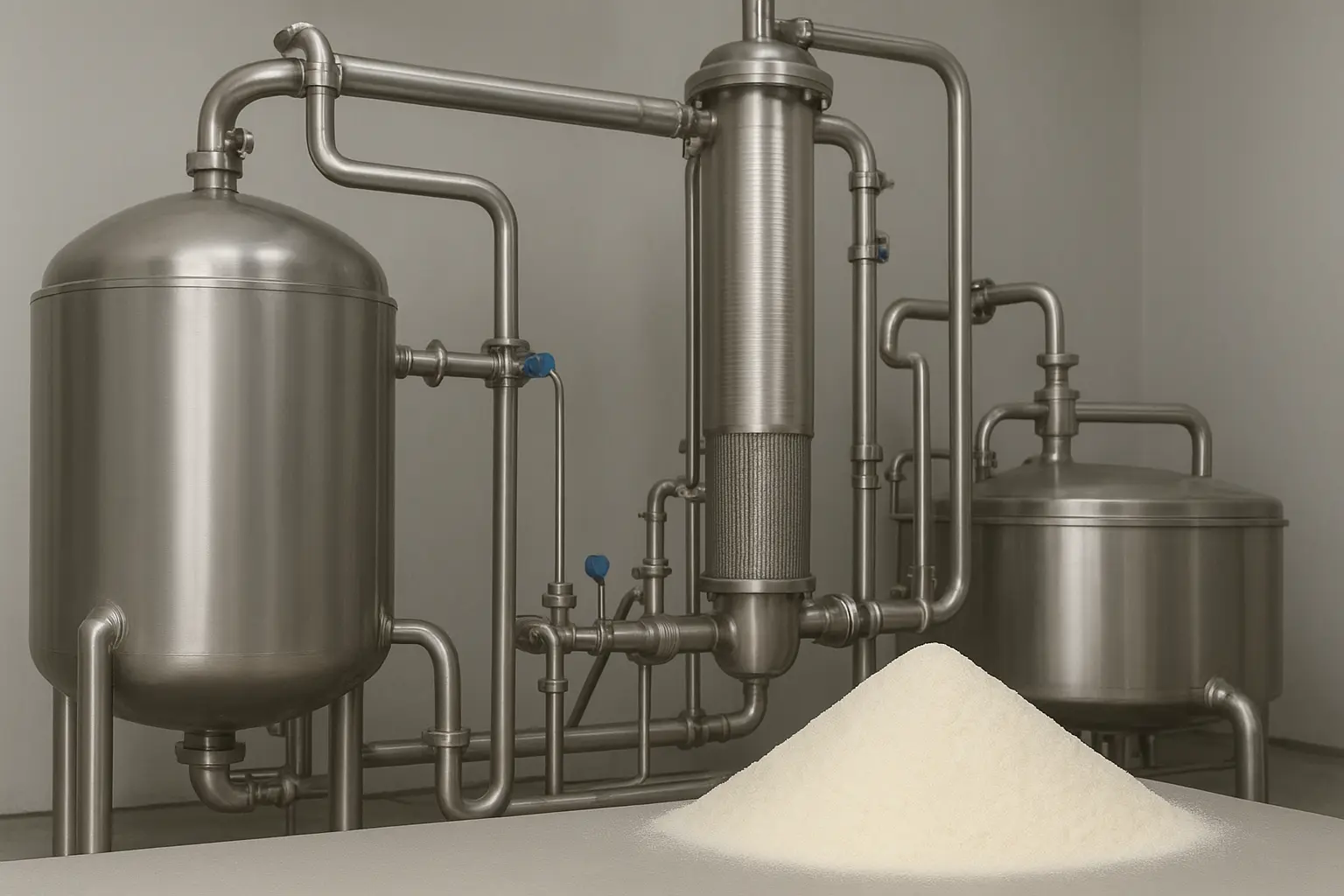
Heat treatment refers to the controlled thermal processing applied to skim milk before and during spray drying. Although the main objective is microbial safety and moisture removal, heat exposure also alters the structure of whey proteins.
More importantly, these protein changes define whether an SMP behaves as a nutritional ingredient, a functional stabilizer, or a structural component in food systems.
Therefore, heat treatment is not a defect or loss of quality. Instead, it is a deliberate processing decision tailored to the final application.
2. Why Heat Treatment Matters in SMP Production
During heating, whey proteins such as β-lactoglobulin and α-lactalbumin can undergo denaturation. As a result, their solubility, reactivity, and interaction with casein change.
Consequently, heat treatment affects:
- Protein solubility
- Water-holding capacity
- Emulsification performance
- Heat stability
- Flavor development
- Nutritional bioactivity
Because of these effects, different food industries require different heat classes of SMP, not one universal product.
3. Heat Treatment Categories of Skim Milk Powder
Skim Milk Powder is generally classified into three heat categories, based on preheating temperature and protein denaturation level.
🔹 Low Heat Skim Milk Powder (LH SMP)
Low Heat SMP is produced using minimal thermal exposure, typically below 70°C.
Key characteristics:
- Very high protein solubility
- Minimal whey protein denaturation
- High RUSS value
- Clean dairy flavor
Typical applications:
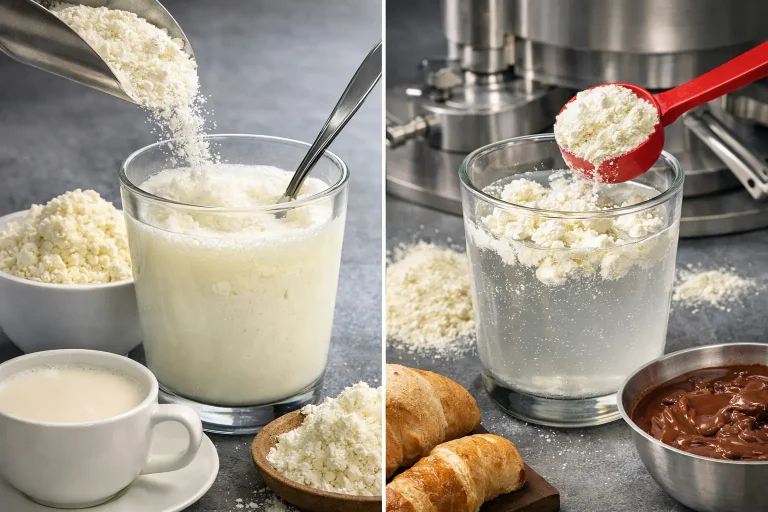
- Recombined liquid milk
- Infant formula (industrial grade)
- Nutritional beverages
- Dairy drinks and coffee applications
Because of its preserved protein structure, Low Heat SMP is preferred when nutritional quality and solubility are critical.
🔹 Medium Heat Skim Milk Powder (MH SMP)
Medium Heat SMP undergoes moderate thermal treatment, usually between 70°C and 90°C.
Key characteristics:
- Balanced solubility and stability
- Partial whey protein denaturation
- Moderate RUSS value
- Improved functional performance
Typical applications:
- Chocolate and cocoa products
- Ice cream mixes
- Desserts and dairy-based sweets
- General food manufacturing
As a result, Medium Heat SMP is considered the most versatile option for multi-purpose industrial use.
🔹 High Heat Skim Milk Powder (HH SMP)
High Heat SMP is produced with intense thermal processing above 90°C.
Key characteristics:
- Lower solubility
- High whey protein denaturation
- Low RUSS value
- Strong water-binding and structural properties
Typical applications:
- Bakery mixes
- Yogurt and fermented products
- Processed cheese
- Meat and savory formulations
Although it is less soluble, High Heat SMP delivers superior functional stability, making it ideal for heat-intensive processing environments.
4. RUSS: The Scientific Indicator of Heat Treatment
RUSS (Reference Undenatured Serum Solids) is a laboratory parameter that quantifies how much whey protein remains undenatured after heat treatment.
In simple terms:
- High RUSS = gentle heat treatment
- Low RUSS = intensive heat treatment
Approximate RUSS classification for SMP:
| Heat Class | RUSS (mg/g) | Functional Profile |
|---|---|---|
| Low Heat | > 6.0 | Excellent solubility |
| Medium Heat | 1.5 – 6.0 | Balanced performance |
| High Heat | < 1.5 | Strong structure & stability |
Therefore, RUSS acts as a technical fingerprint of SMP processing history.
5. How Heat Treatment Affects SMP Functionality
The interaction between heat level and protein structure determines how SMP performs in real formulations.
Low Heat SMP:
- Dissolves rapidly
- Maintains natural protein bioactivity
- Performs best in liquid systems
Medium Heat SMP:
- Offers controlled viscosity
- Improves emulsification
- Supports both liquid and semi-solid foods
High Heat SMP:
- Enhances dough strength
- Improves texture and moisture retention
- Withstands high-temperature processing
Thus, the “best” SMP is not defined by heat level alone, but by application compatibility.
6. Identifying Heat Class When Buying SMP
Manufacturers usually specify heat class on the Technical Data Sheet (TDS) or Certificate of Analysis (COA). However, when it is not clearly stated, buyers can evaluate:
- RUSS value
- Solubility index
- Protein denaturation level
- Preheating description
- Intended application
For example, an SMP with very high solubility and RUSS above 6.0 mg/g is almost certainly Low Heat Skim Milk Powder.
7. Importance of Heat Treatment for Product Development
Choosing the wrong heat class can lead to:
- Poor solubility
- Texture instability
- Processing issues
- Increased production costs
On the other hand, selecting the correct SMP heat treatment ensures:
- Consistent quality
- Predictable processing behavior
- Optimized formulation costs
- Long-term production stability
Therefore, understanding heat treatment is not only a technical requirement, but also a commercial advantage.
8. Heat-Treated SMP in Global and Regional Markets
In export-driven markets, including the Middle East, CIS, and Asia, buyers increasingly demand specific heat-class SMP rather than generic milk powder.
As a result:
- Low Heat SMP dominates nutrition and beverage sectors
- Medium Heat SMP leads general food manufacturing
- High Heat SMP supports bakery and processed foods
Suppliers capable of offering precisely classified SMP gain stronger trust and long-term partnerships.
9. Conclusion
Heat treatment is the defining factor behind the performance of Skim Milk Powder. Whether the goal is solubility, nutritional preservation, or functional stability, the correct heat classification makes all the difference.
In summary:
- Low Heat SMP prioritizes protein integrity and solubility
- Medium Heat SMP offers balanced performance
- High Heat SMP delivers structural strength and processing stability
By understanding heat treatment and RUSS values, food manufacturers and buyers can select Skim Milk Powder with confidence—ensuring technical success, cost efficiency, and consistent product quality.
In modern food production, heat treatment is not a limitation—it is a design tool.