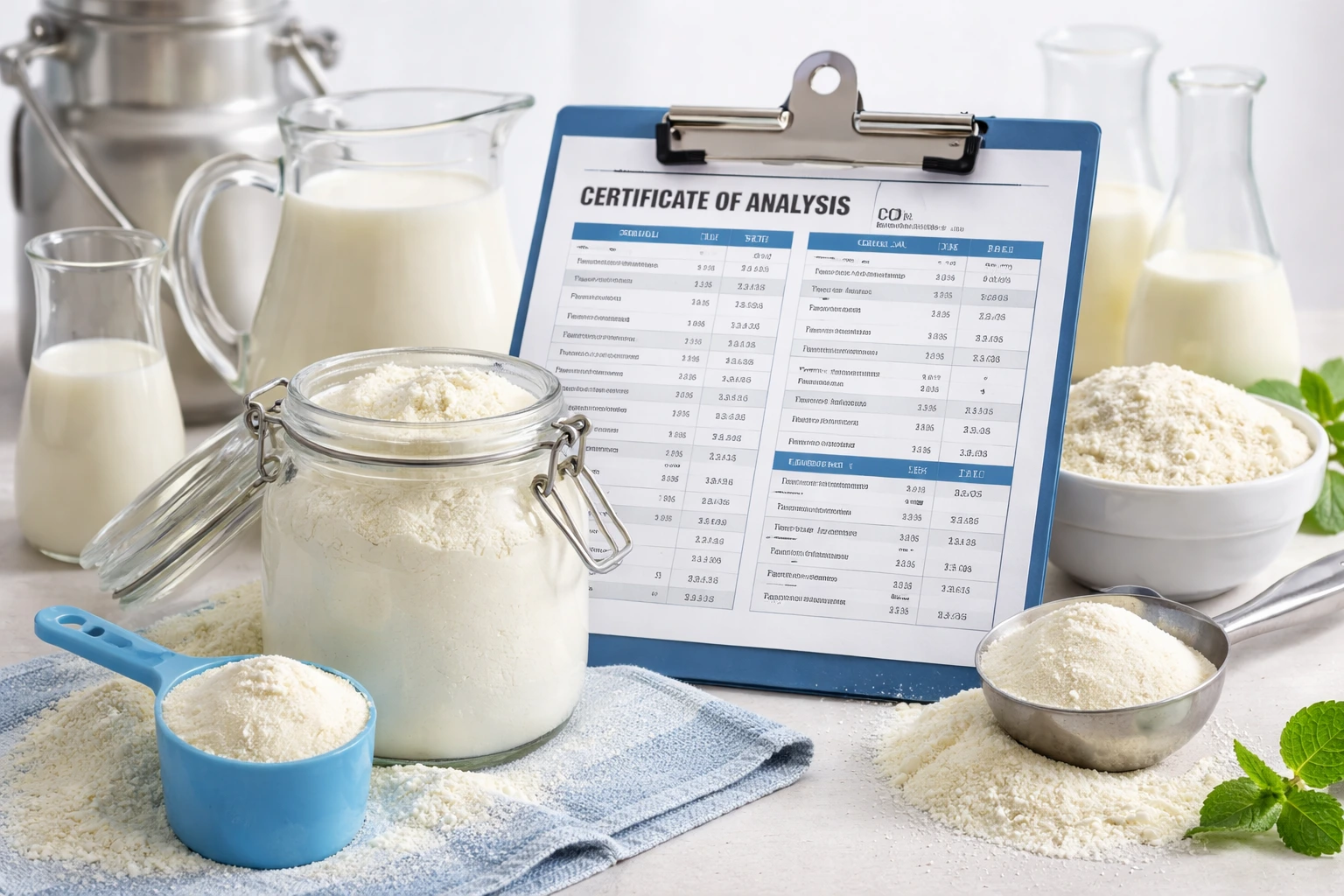
Understanding Milk Powder Specifications on COA and TDS
How to Read and Interpret Milk Powder Analysis Correctly for Industrial Use
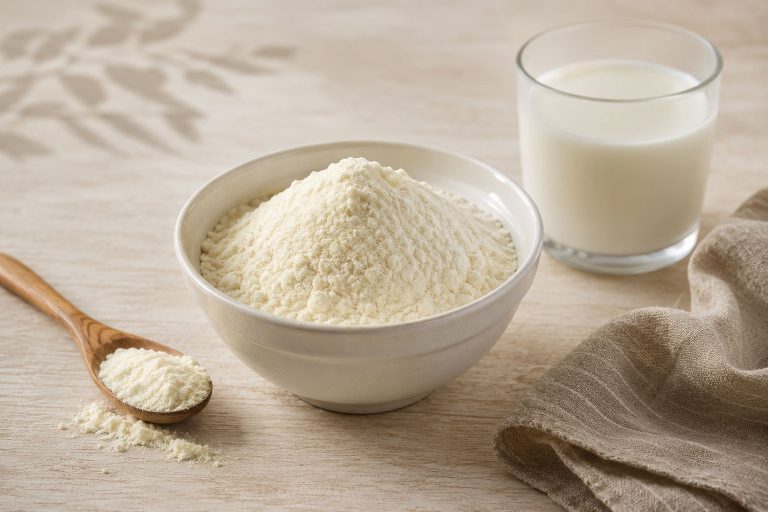
In industrial food production, milk powder is not just a raw material — it is a functional ingredient that directly affects product quality, processing efficiency, shelf life, and regulatory compliance. However, many buyers and even experienced procurement teams rely only on price or supplier reputation, without fully understanding the technical data provided in COA (Certificate of Analysis) and TDS (Technical Data Sheet).
Misinterpreting these documents can lead to processing problems, solubility issues, inconsistent batches, or customer complaints. This article provides a clear, practical, and professional guide to reading milk powder specifications correctly, focusing on the most critical parameters used in industrial purchasing decisions.
COA vs TDS: What’s the Difference?
Before diving into specifications, it’s important to understand the role of each document:
Certificate of Analysis (COA)
A COA is batch-specific. It reports the actual measured values of a particular production lot. This document is essential for:
- Quality control
- Incoming inspection
- Regulatory and audit compliance
- Verifying consistency between batches
Technical Data Sheet (TDS)
A TDS provides typical or target ranges based on standard production. It is used for:
- Product selection
- Formulation planning
- Supplier comparison
- R&D and scale-up decisions
👉 Key rule:
Always compare the COA values against the acceptable ranges defined in the TDS.
1. Moisture Content
Why Water Matters More Than You Think
Moisture (%) refers to the amount of water remaining in the milk powder after drying.
Typical Ranges
- Skim Milk Powder: 3.0 – 4.0%
- Whole Milk Powder: 2.5 – 3.5%
Why Moisture Is Critical
- Shelf life: Higher moisture increases microbial risk and oxidation
- Caking & flowability: Excess moisture causes lumping during storage
- Processing stability: Moisture affects rehydration and mixing behavior
- Regulatory compliance: Many food standards specify maximum moisture limits
Buyer Insight
A slightly higher moisture value might look acceptable on paper, but in hot climates or long shipping routes, it significantly increases the risk of caking and quality degradation.
2. Solubility Index
The Most Misunderstood Parameter
The Solubility Index measures the amount of insoluble sediment remaining after reconstitution under standardized conditions.
Typical Values
- High-quality milk powder: ≤ 0.5 ml
- Acceptable industrial grade: ≤ 1.0 ml
What It Actually Tells You
- Protein denaturation level
- Effectiveness of spray drying
- Impact of heat treatment
- Presence of fines or poor agglomeration
Practical Impact
Poor solubility leads to:
- Lumps in beverages
- Sedimentation in reconstituted milk
- Processing downtime
- Poor consumer perception in instant products
Buyer Insight
Low solubility is often caused by overheating during drying or poor particle structure, not just formulation issues.
3. Bulk Density
Understanding Powder Behavior in Real Systems
Bulk Density describes how much space a powder occupies per unit weight, usually expressed as g/ml.
Typical Ranges
- Non-agglomerated milk powder: 0.55 – 0.75 g/ml
- Agglomerated milk powder: 0.30 – 0.50 g/ml
Why It Matters
- Packaging efficiency
- Transportation cost
- Dosing accuracy
- Flow behavior in silos and feeders
Low vs High Bulk Density
| Density Type | Characteristics | Best Applications |
|---|---|---|
| High Density | Compact, less air | Industrial mixing, tablets |
| Low Density | Porous, instant | Beverages, instant drinks |
Buyer Insight
Choosing the wrong bulk density can cause overfilling, inaccurate dosing, or inconsistent blending, especially in automated systems.
4. RUSS (Reference Unsaponifiable Substances)
A Critical Indicator of Fat Authenticity
RUSS is used primarily for whole milk powder to verify fat origin and authenticity.
What RUSS Indicates
- Detects adulteration with non-dairy fats
- Confirms milk fat purity
- Supports regulatory compliance
Typical Value
- Genuine milk fat: ≤ 0.5 mg/100g fat (depending on standard)
Why It’s Important
In regions with strict food regulations, incorrect RUSS values can:
- Trigger product rejection
- Cause legal or customs issues
- Damage brand reputation
Buyer Insight
RUSS is often ignored by non-technical buyers — but it is one of the most critical parameters for export-oriented products.
Other Important Parameters Often Overlooked
Protein Content
- Indicates nutritional value
- Affects emulsification and foaming
- Critical for dairy beverages and recombined milk
Fat Content
- Influences mouthfeel and flavor
- Affects oxidation stability
- Important for bakery and confectionery applications
Ash Content
- Reflects mineral composition
- High ash may affect taste and solubility
Microbiological Results
- Standard Plate Count
- Yeast & Mold
- Enterobacteriaceae / Salmonella (as applicable)
Common Mistakes Buyers Make When Reading COA
- Checking only moisture and fat
- Ignoring solubility index
- Not matching COA values with TDS limits
- Overlooking batch-to-batch variation
- Assuming “milk powder is milk powder”
👉 Milk powder is not a commodity — it is a functional ingredient.
How to Use COA and TDS Together in Purchasing Decisions
Step-by-Step Buyer Checklist
- Review application requirements (beverage, bakery, recombined milk)
- Match required specs with TDS ranges
- Verify COA values for the delivered batch
- Compare with previous batches
- Document deviations and trends
Why This Knowledge Gives Buyers a Competitive Advantage
Industrial buyers who understand milk powder specifications:
- Reduce production losses
- Improve product consistency
- Negotiate better with suppliers
- Avoid quality claims
- Build stronger supplier relationships
In today’s competitive food industry, technical literacy is purchasing power.
Final Thoughts
Understanding milk powder specifications on COA and TDS is no longer optional — it is a core skill for industrial buyers, quality managers, and product developers.
By learning how to interpret Moisture, Solubility Index, Bulk Density, and RUSS, you move beyond price-based purchasing and into performance-based sourcing.
The result?
Better products, fewer problems, and smarter decisions.