Choosing the Right Dairy Ingredient for Coffee & RTD Drinks
Milk Powder, Creamer, or Whey?
The global coffee and ready-to-drink (RTD) beverage market has grown rapidly in recent years. Consumers now expect consistent taste, smooth texture, and reliable quality in everything from instant coffee to bottled iced lattes and functional RTD drinks.
At the same time, manufacturers face increasing pressure to control cost, extend shelf life, and meet different nutritional and labeling demands. In this environment, selecting the right dairy ingredient is a critical formulation decision.
Although milk powder, creamers, and whey are often grouped together, they are not interchangeable. Each ingredient behaves differently during processing and storage, and each creates a distinct sensory result in the final beverage.
This article offers a clear and practical guide to choosing the most suitable dairy ingredient for coffee and RTD drinks—based on functionality, processing needs, and product positioning.
The Functional Role of Dairy in Coffee and RTD Beverages
Before comparing specific ingredients, it is important to understand why dairy components are used in coffee-based drinks.
In most formulations, dairy ingredients are added to:
-
Improve mouthfeel and creaminess
-
Balance coffee bitterness
-
Enhance color and opacity
-
Support emulsion stability
-
Deliver nutritional value
However, the importance of each function depends on the product format. For example, instant hot coffee requires fast solubility, while RTD beverages demand long-term stability under heat treatment.
Therefore, ingredient selection must always be aligned with application type and processing conditions.
Milk Powder in Coffee and RTD Applications
Functional Characteristics of Milk Powder
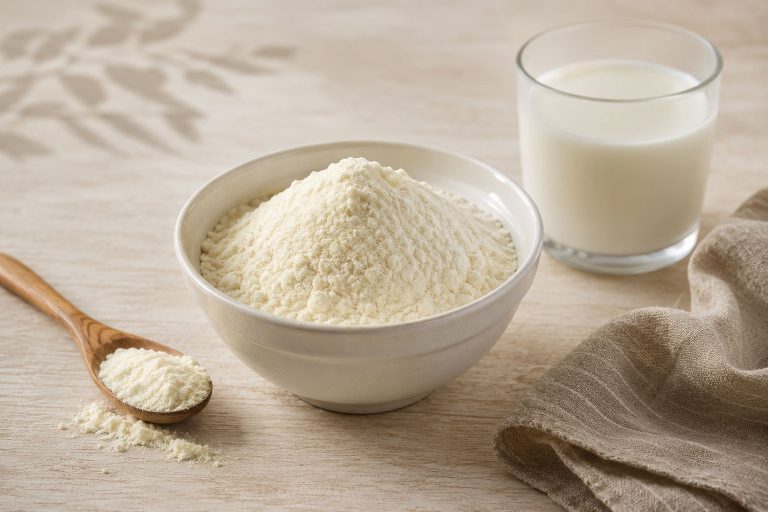
Milk powder remains one of the most traditional dairy ingredients used in coffee products. Both instant skim milk powder (SMP) and instant whole milk powder (WMP) offer a familiar dairy taste and natural composition.
In addition, milk powder provides:
-
Natural lactose sweetness
-
Balanced milk proteins and minerals
-
Strong consumer trust due to clean labeling
As a result, milk powder is often preferred in products positioned as classic or premium dairy beverages.
Performance in Hot Coffee Systems
In hot applications such as instant coffee or vending machines, milk powder performs well when properly instantized. SMP, in particular, shows:
-
Faster hydration
-
Better heat tolerance
-
More consistent behavior during mixing
Meanwhile, WMP adds richer mouthfeel and flavor. However, it also requires better oxygen control and careful storage due to fat oxidation risk.
Limitations in RTD Beverages
Despite its advantages, milk powder has limitations in RTD systems. In many cases:
-
Proteins become unstable at low pH
-
Sedimentation may occur during storage
-
Additional stabilizers are required
Consequently, milk powder alone is rarely sufficient for shelf-stable RTD coffee drinks.
Creamers: Engineered for Coffee Stability
What Makes Creamers Different?
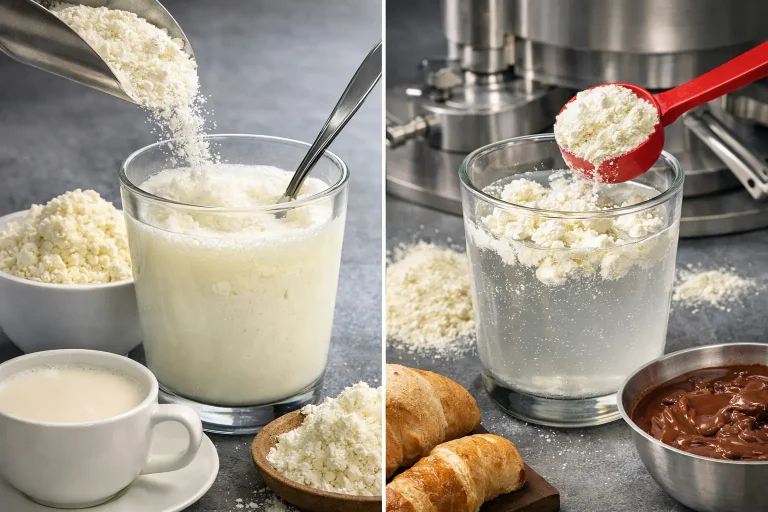
Unlike milk powder, creamers are designed specifically for coffee performance. They are formulated to deliver consistent results under demanding processing conditions.
Typically, creamers contain:
-
Fat (dairy or vegetable-based)
-
Emulsifiers and stabilizers
-
Carbohydrates such as maltodextrin
-
Sometimes milk proteins
Because of this structure, creamers focus on function rather than natural composition.
Advantages in RTD and Instant Coffee
Creamers offer several technical benefits, especially in RTD beverages:
-
Strong whitening effect
-
Effective bitterness masking
-
Excellent emulsion stability
-
Reduced separation and sedimentation
Moreover, creamers perform reliably during UHT and ESL processing. As a result, they are widely used in shelf-stable coffee drinks.
Sensory Consistency and Cost Control
Another advantage of creamers is predictable sensory output. Since fat level and emulsification are controlled, manufacturers achieve:
-
Stable mouthfeel
-
Uniform flavor release
-
Reduced batch variation
In addition, creamers often help control formulation cost during volatile dairy markets.
Trade-Offs of Creamer Use
However, creamers also present some challenges:
-
Longer ingredient lists
-
Less natural consumer perception
-
Possible labeling restrictions
For this reason, creamers are most suitable for mainstream and high-volume RTD products, rather than clean-label or premium dairy drinks.
Whey Ingredients in Coffee and RTD Drinks
The Nutritional Role of Whey
Whey-based ingredients are increasingly popular in functional beverages. Their main purpose is protein enrichment, not creaminess.
Whey offers:
-
High-quality protein
-
Strong amino acid profile
-
Competitive protein cost
Therefore, whey is often used in protein coffees and wellness-focused RTD drinks.
Technical Challenges in Coffee Systems
Despite its nutritional value, whey creates formulation challenges:
-
Heat sensitivity during UHT processing
-
Protein instability at acidic pH
-
Limited contribution to whitening and texture
As a result, whey rarely works well as a standalone dairy ingredient in coffee.
Where Whey Works Best
Whey performs best when:
-
Combined with creamers or milk proteins
-
Used in low-fat or high-protein drinks
-
Applied in functional beverage concepts
In these cases, whey supports nutrition claims while other ingredients handle stability and sensory performance.
Comparing Milk Powder, Creamer, and Whey
Functional Comparison
From a functional point of view:
-
Milk powder delivers authentic dairy flavor
-
Creamers ensure stability and visual appeal
-
Whey enhances protein content
Each ingredient solves a different problem.
Processing and Shelf Life
Processing behavior also differs:
-
Milk powder struggles in acidic RTD systems
-
Creamers tolerate heat and long storage
-
Whey requires careful pH and heat control
Therefore, processing method plays a major role in ingredient selection.
Market Positioning
From a branding perspective:
-
Milk powder supports clean-label and premium positioning
-
Creamers fit mass-market RTD products
-
Whey aligns with fitness and functional trends
Choosing the wrong ingredient can weaken product identity.
A Strategic Approach to Ingredient Selection
Instead of asking which ingredient is better, formulators should consider:
-
Target shelf life
-
Processing technology
-
Nutritional goals
-
Sensory expectations
-
Cost stability
In many cases, blended systems provide the best solution.
Blended Formulations: The Industry Standard
Modern RTD coffee products often combine:
-
Milk powder for dairy authenticity
-
Creamer for stability and mouthfeel
-
Whey for protein enrichment
This approach allows manufacturers to balance cost, performance, and nutrition.
Final Thoughts
Selecting the right dairy ingredient for coffee and RTD drinks is not a simple substitution decision. Each ingredient plays a specific technical role.
Milk powder, creamers, and whey should be viewed as functional tools, not commodities. When chosen correctly, they improve product quality, stability, and consumer acceptance.
In today’s competitive beverage market, informed formulation decisions create long-term success.