Functional Differences Between SMP and WMP
Beyond Fat Content: Understanding the Real Technical Differences Between Skim Milk Powder and Whole Milk Powder
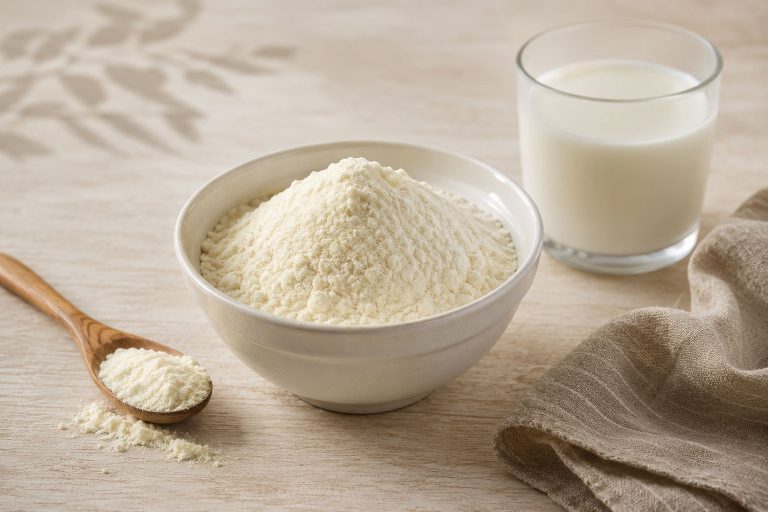
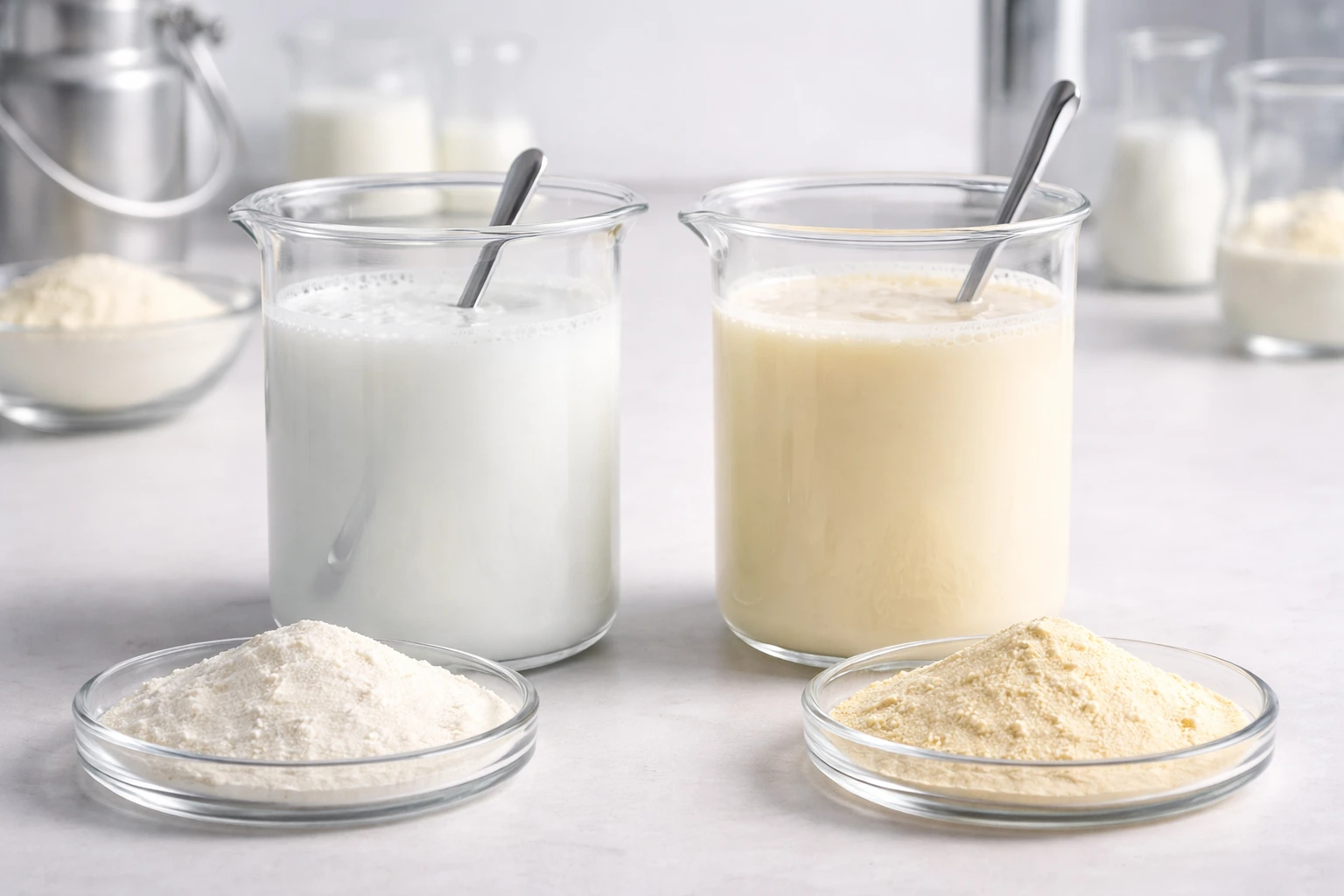
In the food and dairy manufacturing industry, skim milk powder (SMP) and whole milk powder (WMP) are often compared solely on the basis of fat content. However, focusing only on fat percentage oversimplifies a much deeper technical reality. In practice, these two ingredients behave very differently in processing, formulation stability, shelf life, and final product quality.
For this reason, industrial buyers and formulation teams must look beyond basic composition. A correct understanding of functional differences helps prevent formulation failures, production inefficiencies, and unnecessary cost escalation.
This article provides a practical, application-driven comparison of SMP and WMP, with a clear focus on real industrial performance rather than theoretical composition alone.
What Are SMP and WMP?
Skim Milk Powder (SMP)
Skim milk powder is produced by removing almost all milk fat before evaporation and spray drying. As a result, SMP typically contains less than 1.5% fat while maintaining a high protein and lactose content.
Because fat is largely absent, SMP offers greater functional predictability. Consequently, it is widely used in applications where consistency and process control are critical.
Whole Milk Powder (WMP)
Whole milk powder, in contrast, is produced from full-fat milk without fat separation. This means that milk fat remains integrated into the powder matrix during drying.
As a result, WMP delivers a richer sensory profile. However, this advantage comes with additional challenges related to stability, oxidation, and heat sensitivity.
Protein Functionality: More Than Just Protein Content
SMP: Protein Availability and Control
From a functional perspective, SMP offers superior protein accessibility. Because proteins are not coated with fat, they hydrate more easily and interact more efficiently with water and other ingredients.
Therefore, SMP demonstrates:
-
Strong water-binding capacity
-
Reliable emulsification
-
Predictable heat behavior
In industrial systems, this translates into stable viscosity and consistent processing performance.
WMP: Protein–Fat Interaction Effects
In WMP, milk fat partially coats protein particles during spray drying. Consequently, protein hydration occurs more slowly, and emulsification efficiency is reduced.
Nevertheless, this structure contributes positively to mouthfeel and flavor perception, which explains why WMP remains essential in premium dairy formulations.
Solubility and Rehydration Behavior
SMP Solubility Advantages
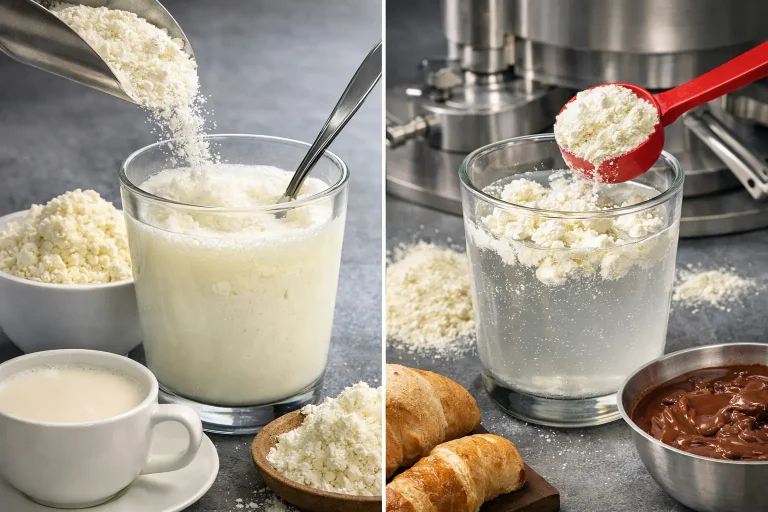
Generally speaking, SMP rehydrates faster and more uniformly than WMP. Moreover, it shows a lower solubility index when properly processed.
For this reason, SMP is preferred in:
-
Instant beverages
-
Recombined milk systems
-
High-speed industrial mixing lines
WMP Solubility Considerations
By comparison, WMP solubility depends heavily on agglomeration quality and particle structure. Without proper instantization, fat separation and surface oiling may occur.
Therefore, instant-grade WMP is often required for beverage applications, especially where consumer perception is critical.
Heat Stability and Processing Performance
SMP Under Heat Treatment
In heat-intensive processes, SMP generally performs more reliably. Because fat-related oxidation is minimal, SMP tolerates UHT and retort conditions more effectively.
As a result, it is widely used in:
-
UHT dairy beverages
-
Sauces and soups
-
Processed dairy bases
WMP Heat Sensitivity
In contrast, WMP introduces additional risks under high heat. Milk fat is sensitive to oxidation, and this can lead to flavor deterioration and equipment fouling.
For this reason, precise temperature control and oxygen management are essential when processing WMP.
Shelf Life and Storage Stability
SMP: Long-Term Stability
Due to its low fat content, SMP exhibits excellent oxidative stability. Consequently, it offers a longer shelf life and greater tolerance to challenging storage conditions.
This makes SMP particularly suitable for import markets and long-distance transportation.
WMP: Oxidation Risk Management
On the other hand, WMP requires more careful storage. Exposure to oxygen, light, or heat can accelerate fat oxidation.
Therefore, packaging quality and logistics management play a decisive role in maintaining WMP quality.
Sensory Contribution and Flavor Impact
SMP: Neutral Functional Base
From a sensory standpoint, SMP provides a clean dairy background without dominating the flavor profile. As a result, it allows other ingredients such as cocoa, coffee, or fruit to define the final taste.
This neutrality offers significant formulation flexibility.
WMP: Richness and Mouthfeel
Conversely, WMP contributes creaminess, richness, and a full dairy flavor. For this reason, it is indispensable in applications where sensory quality defines product value.
Examples include chocolate, ice cream, and infant nutrition.
Bulk Density and Industrial Handling
SMP Handling Efficiency
Typically, SMP has higher bulk density and better flowability. Consequently, it performs well in automated dosing and continuous production systems.
This reduces waste and improves process accuracy.
WMP Handling Challenges
Meanwhile, WMP often exhibits lower bulk density and a higher tendency to cake. Temperature fluctuations further increase this risk.
As a result, storage and handling protocols must be carefully controlled.
Nutritional and Labeling Implications
SMP for Functional and Health Products
Nutritionally, SMP supports high-protein and low-fat positioning. Therefore, it is commonly used in health-focused and functional foods.
WMP for Energy-Dense Products
WMP, by contrast, offers higher caloric density and delivers fat-soluble vitamins naturally. This makes it suitable for products targeting growth, satiety, and premium nutrition.
Cost Structure and Market Dynamics
SMP Cost Stability
From an economic standpoint, SMP prices are generally more stable. Because fat markets are excluded, price volatility is reduced.
This stability supports long-term cost planning.
WMP Cost Sensitivity
WMP pricing, however, is closely linked to butter and milk fat markets. Consequently, price fluctuations are more frequent and sometimes unpredictable.
Application-Based Summary
In practice, SMP and WMP serve distinct roles rather than interchangeable functions.
-
SMP excels in stability-driven applications
-
WMP dominates in sensory-driven products
Selecting the wrong powder can compromise both quality and profitability.
Final Thoughts
Ultimately, the functional differences between skim milk powder and whole milk powder extend far beyond fat content. Each ingredient serves a specific technical purpose within food formulation and processing.
Therefore, smart buyers and product developers evaluate milk powder not as a commodity, but as a functional tool aligned with production goals.
In today’s competitive food industry, technical understanding is not optional — it is a strategic advantage.