Milk Powder vs. MPC vs. WPC
Which Dairy Ingredient Is Right for Your Product Formulation?
Although milk powder, MPC, and WPC are all supplied in powdered form, they are not technically the same category of ingredient. Milk powder is a whole dairy ingredient, while MPC and WPC are protein-enriched dairy fractions designed for specific functional and nutritional purposes. This article
In modern food and beverage formulation, choosing the right dairy ingredient is no longer a simple matter of nutrition alone. Functional performance, processing stability, cost efficiency, labeling requirements, and end-product texture all play critical roles. Among the most widely used dairy ingredients, milk powder, milk protein concentrate (MPC), and whey protein concentrate (WPC) are often compared—yet they serve very different technical purposes.
For product developers in beverages, bakery, and nutrition, understanding the real functional differences between these ingredients is essential. This article provides a practical, application-driven comparison to help manufacturers select the most suitable option for their formulations.
Understanding the Three Ingredients at a Glance
Before diving into applications, it is important to clarify what differentiates milk powder, MPC, and WPC at a structural and compositional level.
Milk Powder
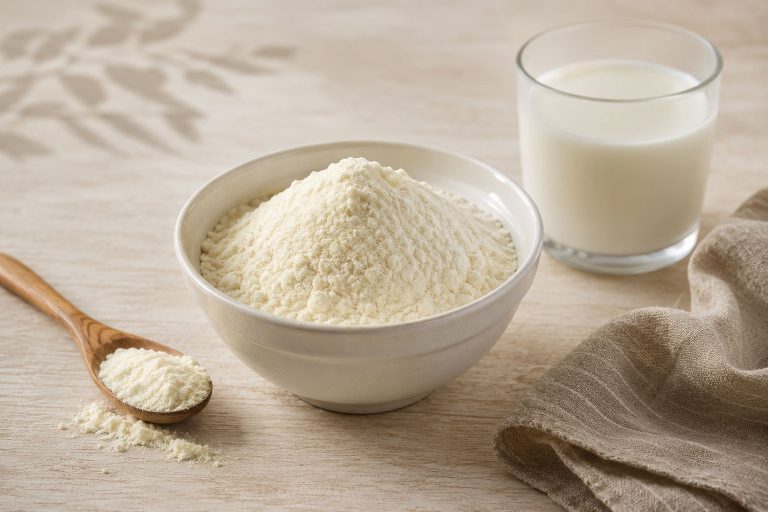
Milk powder is produced by removing water from pasteurized milk, usually via spray drying. Depending on the fat content, it may be whole milk powder or skim milk powder. Importantly, milk powder contains all natural milk components in balanced proportions—proteins, lactose, minerals, and sometimes fat.
Milk Protein Concentrate (MPC)
MPC is made by filtering milk to concentrate its protein fraction while retaining both casein and whey proteins in their natural ratio. MPC products typically contain 40% to 85% protein, with reduced lactose compared to milk powder.
Whey Protein Concentrate (WPC)
WPC is derived from liquid whey, a by-product of cheese production. It is processed to concentrate whey proteins, usually reaching 35% to 80% protein, while containing very little fat and variable lactose.
Each ingredient delivers protein—but not in the same way, and not with the same functional outcomes.
Protein Composition and Functional Behavior
Protein type strongly influences how an ingredient behaves during processing and in the final product.
Milk powder proteins are naturally balanced between casein and whey, making them suitable for general-purpose use. Caseins provide structure and stability, while whey proteins contribute solubility and heat responsiveness.
MPC also contains both casein and whey proteins, but at much higher concentrations. This makes MPC ideal for protein fortification where maintaining dairy structure and mouthfeel is important.
WPC, in contrast, contains only whey proteins, which are highly soluble and fast-digesting but lack the structural contribution of casein.
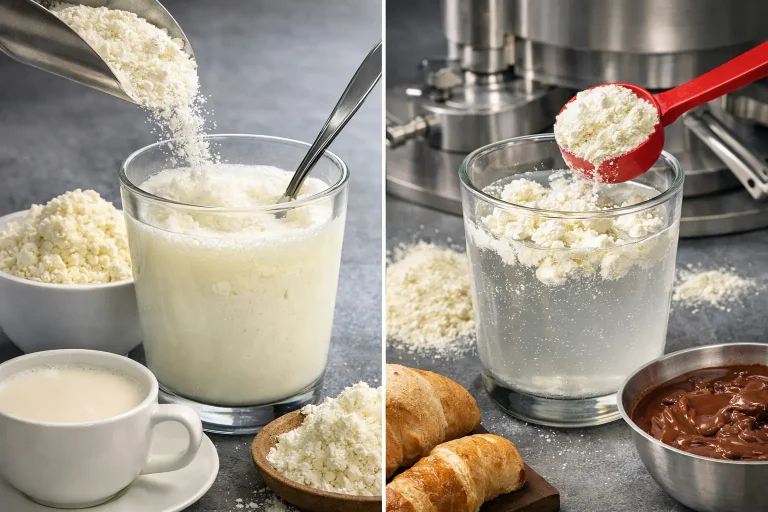
This fundamental difference explains why WPC performs well in clear beverages but may struggle in baked goods, while MPC excels in structured dairy systems.
Application Comparison: Beverages
Milk Powder in Beverages
Milk powder is widely used in:
- RTD milk-based drinks
- Coffee and tea creamers
- Chocolate and flavored milk
Its strengths include:
- Balanced mouthfeel
- Good heat stability in UHT processing
- Familiar dairy flavor
However, milk powder contributes moderate protein levels, making it less suitable for high-protein beverage claims.
MPC in Beverages
MPC is often chosen for:
- High-protein RTD drinks
- Nutritional shakes
- Yogurt drinks
Advantages include:
- High protein density
- Creamy texture due to casein content
- Better satiety perception
Challenges may arise with hydration speed and viscosity management, especially at higher protein levels.
WPC in Beverages
WPC is commonly used in:
- Clear or flavored protein drinks
- Sports and recovery beverages
Its benefits include:
- Excellent solubility
- Low viscosity at high protein levels
- Clean protein delivery
However, WPC may create:
- Thin mouthfeel
- Whey flavor notes
- Lower heat stability in UHT systems
Summary for beverages:
- Milk powder → traditional dairy drinks
- MPC → creamy high-protein beverages
- WPC → clear or light protein drinks
Application Comparison: Bakery Products
Milk Powder in Bakery
Milk powder remains a staple ingredient in bakery formulations due to its multifunctionality. It contributes:
- Browning via lactose
- Flavor development
- Dough handling improvement
- Moisture retention
It is particularly effective in bread, biscuits, cakes, and pastries.
MPC in Bakery
MPC can enhance:
- Protein enrichment
- Structure in high-protein baked goods
- Moisture binding
However, high MPC levels may:
- Increase dough stiffness
- Require formulation adjustment
MPC is best suited for functional or nutrition-focused bakery products rather than conventional bread.
WPC in Bakery
WPC is used in:
- Protein bars
- Cookies
- Sports bakery items
Its whey proteins improve:
- Foam structure
- Texture softness
But WPC lacks lactose and casein, which limits browning and structure compared to milk powder.
Summary for bakery:
- Milk powder → standard and premium bakery
- MPC → protein-enriched bakery
- WPC → specialty protein bakery
Application Comparison: Nutrition and Functional Foods
Milk Powder in Nutrition
Milk powder is suitable for:
- General nutrition products
- Infant and family foods
- Balanced meal replacements
It offers:
- Natural nutrient balance
- Familiar digestion profile
However, it does not support high protein claims efficiently.
MPC in Nutrition
MPC is highly valued in:
- Medical nutrition
- Elderly nutrition
- High-protein meal replacements
Benefits include:
- Slow digestion due to casein
- Sustained amino acid release
- Improved satiety
MPC aligns well with functional nutrition goals.
WPC in Nutrition
WPC is dominant in:
- Sports nutrition
- Muscle recovery products
- Protein powders
Its fast absorption supports post-exercise recovery but may not provide long-lasting satiety.
Summary for nutrition:
- Milk powder → balanced nutrition
- MPC → sustained protein delivery
- WPC → fast-acting protein
Processing and Manufacturing Considerations
Heat Stability
- Milk powder: Good overall heat tolerance
- MPC: Depends on protein level and heat treatment
- WPC: Sensitive to heat at high protein concentrations
Solubility
- Milk powder: Good, but slower hydration
- MPC: Requires controlled dispersion
- WPC: Excellent instant solubility
Cost Efficiency
- Milk powder: Most cost-effective multifunctional ingredient
- MPC: Higher cost due to protein concentration
- WPC: Variable cost depending on protein level
Labeling and Consumer Perception
From a labeling perspective:
- Milk powder is perceived as natural and familiar
- MPC may raise questions in clean-label markets
- WPC is strongly associated with sports and fitness
Market positioning should align ingredient choice with consumer expectations.
Choosing the Right Ingredient: Practical Guidelines
Ask these questions before selecting an ingredient:
- Is protein enrichment the main goal or a secondary benefit?
- Does the product require structure or clarity?
- What processing conditions will be used (UHT, baking, mixing)?
- How important is cost versus functionality?
- What claims and labeling are planned?
There is no universal “best” ingredient—only the right ingredient for the right application.
Final Thoughts
Milk powder, MPC, and WPC each play essential but distinct roles in modern food formulation. Milk powder offers balance and versatility. MPC delivers structured protein enrichment. WPC provides fast, clean protein functionality.
Understanding their differences allows manufacturers to reduce formulation risk, improve product performance, and align technical choices with market goals.
In competitive food industries, smart ingredient selection is not optional—it is a strategic advantage.