Milk Powder Adulteration: Risks and Quality Control
How to Identify Fraud, Protect Product Integrity, and Buy Milk Powder Safely in the Import Market
Milk powder is one of the most widely traded dairy ingredients in the global food industry. Thanks to its long shelf life, ease of transportation, and wide functional applications, it plays a critical role in products such as beverages, bakery items, confectionery, recombined dairy, infant nutrition, and industrial food formulations.
However, the same characteristics that make milk powder commercially attractive also make it highly vulnerable to adulteration—particularly in import-driven markets where buyers depend heavily on documentation rather than direct access to production facilities.
Milk powder adulteration is not just a technical quality issue. It is a serious commercial risk that can directly affect product performance, food safety, regulatory compliance, brand reputation, and long-term customer trust.
This article provides a practical, industry-focused guide to:
-
Common types of milk powder adulteration
-
The risks associated with adulterated products
-
Simple on-site and laboratory detection methods
-
Quality control strategies for import markets
-
Safe purchasing practices for industrial buyers
The objective is not only risk prevention, but also confidence building and brand protection.
Understanding Milk Powder Adulteration
Milk powder adulteration refers to the intentional manipulation or substitution of product components in order to reduce cost, disguise inferior quality, or misrepresent specifications.
Unlike accidental contamination, adulteration is deliberate. In many cases, products are engineered to pass basic inspections and paperwork checks while failing in real processing conditions or final product performance.
Why Milk Powder Is a High-Risk Ingredient
Several factors increase the likelihood of adulteration in milk powder trade:
-
Powdered form hides visual quality cues
-
Global sourcing through multiple intermediaries
-
High price volatility in dairy markets
-
Heavy reliance on COA documentation
-
Limited opportunity for on-site audits in import transactions
As a result, buyers may receive milk powder that appears compliant on paper but performs poorly in production or finished products.
Common Types of Milk Powder Adulteration
1. Addition of Non-Milk Proteins
One of the most common adulteration methods is artificially increasing protein content using cheaper nitrogen-rich substances, such as:
-
Plant proteins
-
Non-dairy nitrogen sources
-
Historically, melamine-related compounds
While these materials may inflate Kjeldahl protein values, they do not provide dairy functionality and may pose serious health risks. Functional performance in beverages, texture, and nutritional value are often compromised.
2. Fat Substitution in Whole Milk Powder
In whole milk powder, milk fat may be partially or fully replaced with non-dairy fats, including:
-
Vegetable oils
-
Palm oil fractions
-
Other low-cost fat sources
This substitution negatively affects flavor, mouthfeel, oxidative stability, and regulatory compliance. Without advanced fat profiling, such fraud can remain undetected.
3. Moisture Manipulation
Increasing moisture content is a subtle way to increase shipment weight. However, excess moisture leads to:
-
Reduced shelf life
-
Caking and poor flowability
-
Higher microbial risk
This practice is especially problematic in hot climates and long shipping routes.
4. Ash and Mineral Manipulation
Adding inorganic salts increases ash content and weight while lowering production cost. High ash levels negatively impact:
-
Taste
-
Solubility
-
Functional performance
They often indicate either poor-quality raw milk or intentional dilution.
5. Re-labeled or Reworked Powder
Out-of-spec or downgraded milk powder may be:
-
Re-bagged
-
Blended with fresh material
-
Sold under misleading specifications
This creates serious batch-to-batch inconsistency and long-term quality instability.
Risks of Adulterated Milk Powder
1. Product Performance Failure
Adulterated milk powder frequently causes:
-
Poor solubility
-
Sedimentation
-
Texture defects
-
Inconsistent viscosity
These issues lead to production inefficiencies and formulation failures.
2. Food Safety and Regulatory Exposure
Non-compliant products can result in:
-
Import rejection
-
Product recalls
-
Regulatory penalties
-
Customs clearance delays
For export-oriented manufacturers, these risks are even greater.
3. Brand Reputation Damage
Once inconsistent quality reaches the market:
-
Consumer trust declines
-
Distributor confidence weakens
-
Long-term brand value is damaged
Recovering from reputation loss is far more costly than preventive quality control.
4. Financial Losses
Adulteration often leads to:
-
Raw material waste
-
Reprocessing costs
-
Customer claims
-
Loss of repeat business
In B2B markets, a single quality failure can permanently end a commercial relationship.
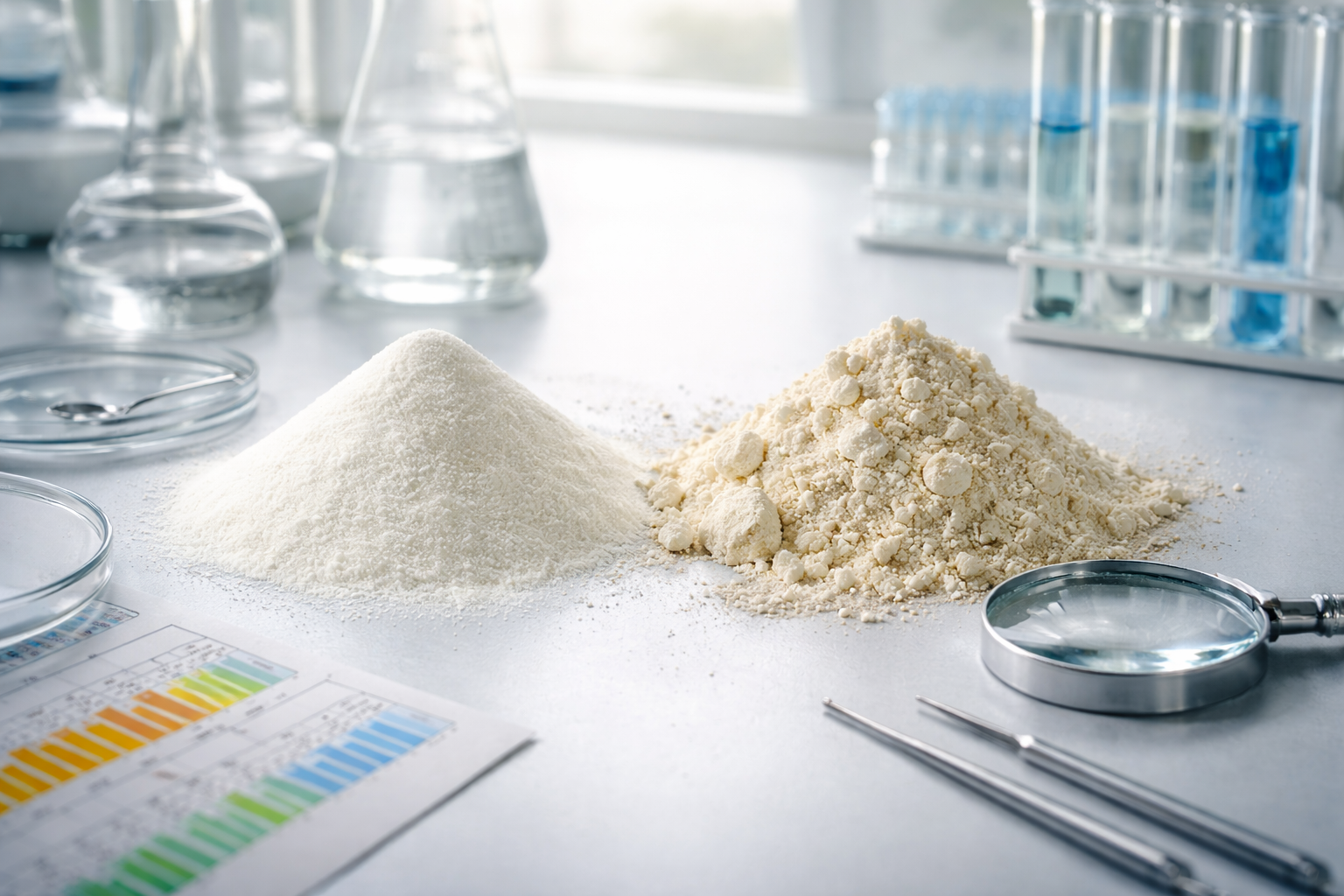
Simple On-Site Checks for Buyers
Although laboratory testing is essential, several basic checks can be performed immediately upon receipt.
Visual Inspection
-
Unusual color variation
-
Excessive fines or dust
-
Visible clumping
-
Non-uniform particle size
These signs may indicate moisture issues, poor drying, or blending.
Smell and Sensory Evaluation
-
Oxidized or oily odors
-
Musty or stale notes
-
Weak or abnormal dairy aroma
Sensory deviations often appear before analytical failures.
Flowability Assessment
Poor flow may indicate:
-
High moisture content
-
Improper agglomeration
-
Excess fines
Laboratory Tests for Detecting Adulteration
Moisture Content
Confirms drying quality, shelf-life stability, and detects weight manipulation.
Solubility Index
Reveals protein denaturation, processing issues, and suitability for instant and beverage applications.
Fat Analysis and Fat Profile
Verifies milk fat authenticity and detects vegetable fat substitution in whole milk powder.
RUSS (Reference Unsaponifiable Substances)
Identifies non-dairy fat sources and supports authenticity verification, especially in regulated markets.
Protein Characterization
Advanced methods differentiate true milk proteins from added non-dairy nitrogen sources.
Ash Content
High ash values suggest mineral adulteration, poor raw milk quality, or processing shortcuts.
Quality Control in the Import Market
Import markets face unique challenges such as limited supplier transparency, long supply chains, and multiple intermediaries. Quality control must therefore be proactive and systematic.
Documentation Verification
-
COA values must align with TDS ranges
-
Batch numbers must be consistent
-
Critical lots should be confirmed by independent laboratories
Supplier Qualification
-
Audit production facilities where possible
-
Evaluate traceability systems
-
Review historical batch consistency
Third-Party Testing
Independent testing provides objectivity, legal protection, and greater confidence in purchasing decisions.
Secure Milk Powder Purchasing: Best Practices
Avoid Price-Only Decisions
Unusually low prices often indicate compromised quality, adulteration, or short shelf life.
Demand Full Technical Transparency
Request complete COA and TDS, production dates, shelf life, heat treatment details, and functional properties.
Test Before Scaling
Use pilot batches and trial quantities to validate performance in real formulations.
Build Long-Term Supplier Relationships
Reliable suppliers prioritize consistency, traceability, and reputation over short-term profit.
Adulteration Prevention as a Branding Strategy
Quality control is not only defensive—it is a powerful branding tool.
Companies that actively communicate their quality standards, testing protocols, and traceability systems build stronger trust with industrial buyers, distributors, and regulatory authorities.
In competitive markets, trust becomes a key differentiator.
Final Thoughts
Milk powder adulteration remains a real and persistent risk in global dairy trade, particularly in import-driven markets. However, it is a controllable risk.
By understanding common adulteration practices, implementing strong quality control systems, applying appropriate testing methods, and adopting secure purchasing strategies, buyers can protect their products, customers, and brands.
In modern food manufacturing, quality is not assumed—it is verified.
Ultimately, strong quality control does more than prevent problems.
It builds confidence, credibility, and long-term success.