Milk powder and dairy-based functional ingredients play a critical role in modern food production. Today, from bakery and confectionery to beverages, chocolates, processed meat, supplements, and dairy-based desserts, milk-derived ingredients form the backbone of many industrial food formulations. However, choosing the right type of milk powder and protein ingredient is not simply about price. Instead, it directly affects product quality, taste, texture, shelf life, nutritional value, and overall production efficiency.
For this reason, this comprehensive guide is specifically designed for manufacturers, importers, distributors, and food brand owners who need a clear, practical, and professional understanding of the following products:
- Skim Milk Powder (SMP)
- Whole Milk Powder (WMP)
- MilK Protein Concentrate (MPC)
- Whey Protein Concentrate (WPC)
- Whey Permeate powder
- Industrial Butter
- Rennet (Primary Cheese / Initial Cheese)
- Instant Whole Milk Powder (WMP)
- Instant Skimmed Milk Powder
- Anhydrous Milk Fat (AMF)
- Aseptic (UHT) Cream
- ButterMilk Powder
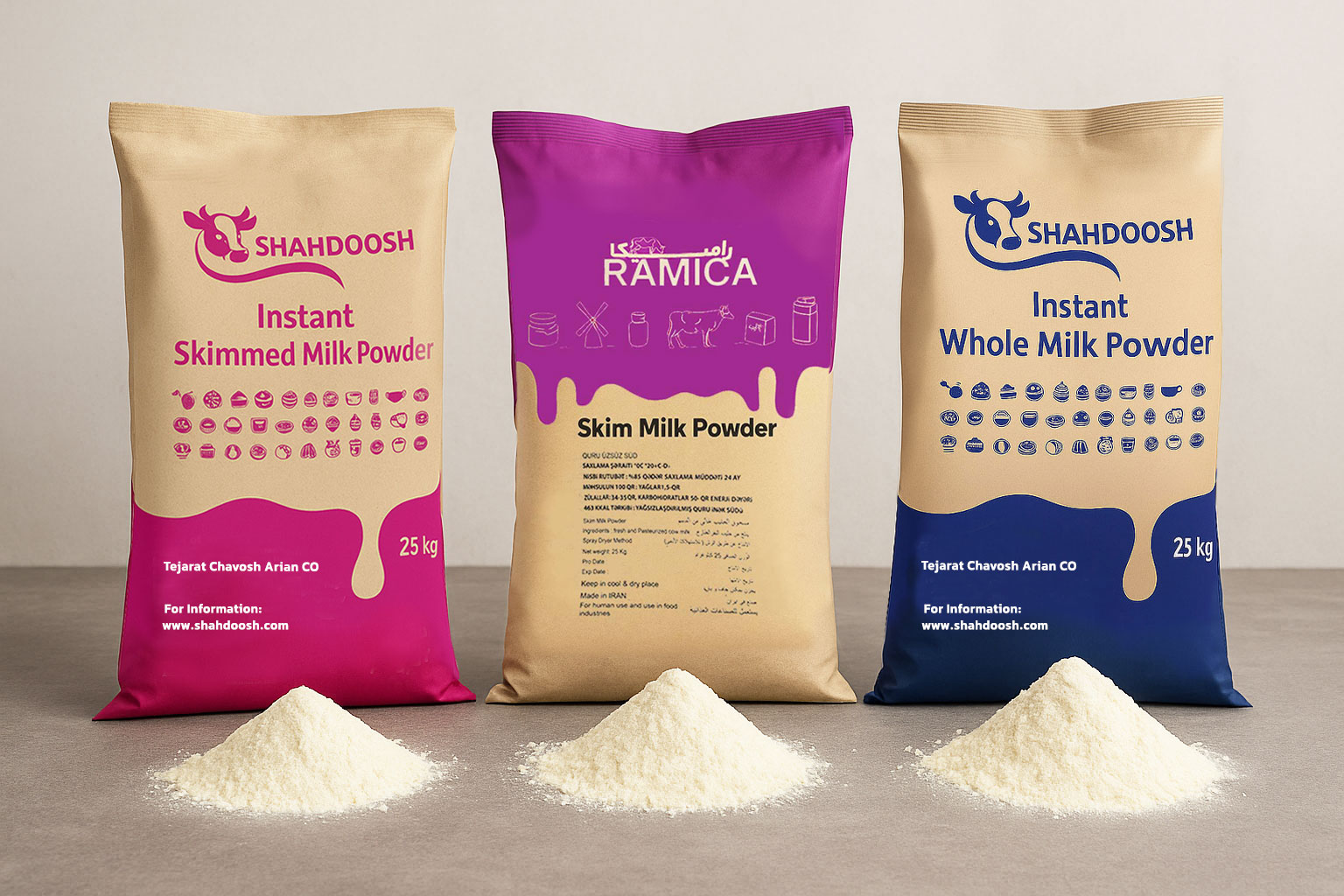
- Skim Milk Powder – Ramica
- Instant Skim Milk Powder – Ramica
By the end of this guide, you will be able to select the exact dairy ingredient that fits your formulation, cost structure, and product positioning with confidence.
1. Why Milk Powder and Dairy Ingredients Are Strategic in Food Manufacturing
Milk powder is not only a source of nutrition. More importantly, it is a functional engineering ingredient in industrial food systems. In large-scale production, dairy ingredients directly influence:
-
Product structure and mouthfeel
-
Water binding and emulsification
-
Flavor depth and sensory quality
-
Protein and fat balance
-
Shelf stability and storage performance
-
Export durability and logistics safety
Therefore, whether you are producing biscuits, cakes, sauces, ice cream, chocolates, ready meals, or protein beverages, the right dairy ingredient selection determines the technical and commercial success of your formulation.
2. Skim Milk Powder (SMP): The Backbone of Cost-Efficient Dairy Formulation
Skim Milk Powder is produced by removing fat from fresh milk and then spray-drying the remaining liquid. As a result, it typically contains:
-
High protein content
-
Very low fat
-
Excellent solubility
-
Strong water-binding capacity
Industrial Applications of SMP:
-
Bakery and biscuit production
-
Chocolate and cocoa mixes
-
Ice cream base stabilization
-
Yogurt and fermented drinks
-
Sauces and dressings
-
Processed meat formulations
Key Benefits:
-
Improves texture and consistency
-
Enhances protein value
-
Controls cost without reducing structure
-
Increases product stability
For this reason, SMP is the most widely used dairy powder in high-volume food processing, mainly due to its versatility and economic efficiency.
3. Whole Milk Powder (WMP): Full Dairy Flavor and Creamy Performance
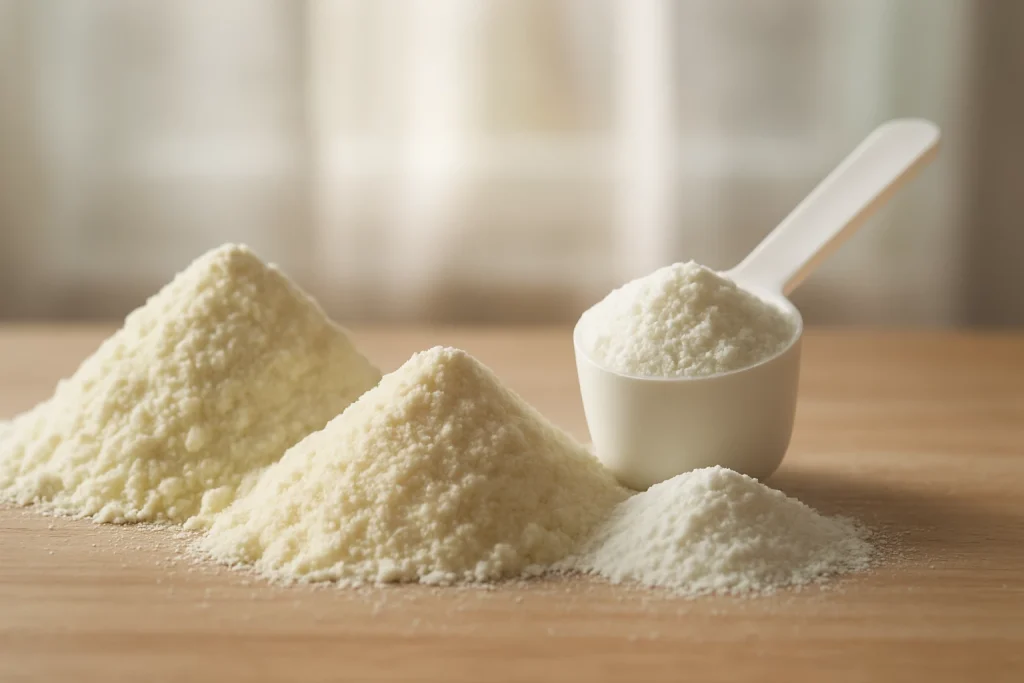
Unlike SMP, Whole Milk Powder retains its natural fat content. As a result, it naturally provides:
-
Rich dairy aroma
-
Creamy mouthfeel
-
Enhanced flavor depth
-
Natural emulsification
Best Uses of WMP:
-
Chocolate and confectionery
-
Infant formula (industrial-grade)
-
Premium bakery products
-
Milk-based beverages
-
Ice cream and desserts
When to Choose WMP:
If your product depends on full dairy flavor, richness, and premium sensory appeal, then WMP becomes the preferred ingredient.
4. Milk Protein Concentrate (MPC): High-Performance Dairy Protein
MPC is produced through advanced membrane filtration. Through this process, milk proteins are concentrated while maintaining:
-
High protein content
-
Excellent solubility
-
Functional emulsification
Applications of MPC:
-
Protein beverages
-
Nutrition bars
-
Sports supplements
-
Dairy desserts
-
Cheese analogs
-
Processed foods requiring protein fortification
Benefits of MPC:
-
Improves protein labeling claims
-
Enhances texture and viscosity
-
Improves water-holding capacity
-
Supports muscle nutrition formulations
Consequently, MPC is widely used in functional foods and modern sports nutrition products.
5. Whey Powder & Whey Protein Concentrate (WPC)
Whey is a natural by-product of cheese manufacturing. Over time, it has become one of the most valuable protein ingredients in the global food industry.
Whey Powder:
-
Lower protein content
-
High lactose
-
Used for flavor, sweetness, and texture
WPC:
-
High protein content
-
Excellent amino acid profile
-
Rapid absorption
Applications:
-
Sports nutrition
-
Protein drinks
-
Bakery
-
Ice cream
-
Dairy beverages
-
Medical nutrition products
As a result, whey ingredients offer high bioavailability, fast digestibility, and wide formulation flexibility.
6. Anhydrous Milk Fat (AMF): Pure Butterfat for Industrial Precision
AMF contains over 99.8% milk fat, with all water and non-fat solids removed. Because of this purification process, it is perfectly designed for industrial performance.
Advantages of AMF:
-
Very long shelf life
-
Excellent thermal stability
-
Easy storage and transportation
-
Consistent fat performance
Main Uses:
-
Chocolate manufacturing
-
Bakery shortcuts and pastry
-
Ice cream production
-
Recombined dairy products
-
Export-oriented food products
Therefore, AMF provides complete control over fat content and product stability, which makes it a strategic ingredient in global food trade.
7. Industrial Butter: Flavor, Texture, and Authenticity
Although AMF dominates industrial fat systems, industrial-grade butter still plays a major role in premium bakery, confectionery, and gourmet food production.
Key Applications:
-
Croissants and laminated pastries
-
Cakes and cookies
-
Sauces and creams
-
Ready meals
Butter contributes directly to:
-
Unique dairy aroma
-
Natural emulsification
-
Soft crumb texture
-
Authentic premium positioning
8. Rennet (Primary Cheese / Initial Cheese): The Foundation of Cheese Structuring
Rennet is the essential enzyme used to coagulate milk during cheese production. For this reason, it is fundamental in:
-
Industrial cheese manufacturing
-
Processed cheese lines
-
Dairy-based snack products
Benefits in Industry:
-
Controlled curd formation
-
Stable cheese structure
-
Consistent moisture retention
-
Predictable melt performance
For factories producing cheese analogs, pizza cheese, and processed dairy slices, high-quality rennet ensures long-term production stability and product consistency.
9. How to Choose the Right Dairy Ingredient for Your Product
Before selecting any dairy ingredient, it is essential to define:
-
Final product category
-
Required protein percentage
-
Fat profile and melting behavior
-
Shelf life expectations
-
Export or domestic distribution
-
Target consumer price
Example:
-
Protein shake → MPC or WPC
-
Chocolate bar → WMP + AMF
-
Biscuit → SMP
-
Ice cream → WMP + Whey + AMF
-
Cheese analog → Rennet + MPC
Each product requires a precise functional balance, not only basic nutritional value.
10. Cost Control vs Product Positioning
One of the most common mistakes in food manufacturing is choosing dairy ingredients only based on price. In practice, however:
-
Lower-cost ingredients may increase formulation instability
-
Premium ingredients justify higher retail pricing
-
Functional efficiency reduces production waste
-
Shelf-life stability reduces return and spoilage losses
Therefore, strategic brands manage ingredient cost per unit of successful sales, not simply per kilogram of raw material.
11. Dairy Ingredients and Export Readiness
Export-grade products must meet strict technical requirements, including:
-
High microbiological stability
-
Long shelf life
-
Stable fat oxidation resistance
-
Consistent organoleptic profile
-
Reliable supply chain
As a result, ingredients such as AMF, SMP, MPC, and WPC become the backbone of export-oriented food production.
12. Consumer Trends Influencing Dairy Ingredient Selection
Modern consumers increasingly demand:
-
High-protein foods
-
Clean-label formulations
-
Functional nutrition
-
Lower lactose products
-
More stable digestive tolerance
For this reason:
-
MPC and WPC usage is rising
-
Whey is growing in beverage markets
-
AMF is replacing unstable fats
-
Controlled dairy blends are replacing traditional butter in large-scale production
13. Common Mistakes When Buying Milk Powder and Dairy Ingredients
Many buyers still struggle with the same purchasing errors, including:
-
Buying solely based on lowest price
-
Ignoring solubility and heat stability
-
Not checking protein-to-fat ratio
-
Using household-grade ingredients in industrial lines
-
Ignoring export shelf-life requirements
-
Purchasing from unreliable supply chains
For this reason, professional procurement is always based on functional specifications, not only technical data sheets.
14. Role of Dairy Ingredients in Brand Quality Perception
Although consumers may not see raw ingredients directly, they strongly feel the result through:
-
Mouthfeel
-
Aroma
-
Aftertaste
-
Product stability
-
Repeat purchase behavior
Consequently, many global brands differentiate their products primarily through fat source, protein type, and milk-derived ingredients, not through flavoring alone.
15. About Tejarat Chavosh Arian & Its Dairy Ingredient Portfolio
Tejarat Chavosh Arian is one of Iran’s specialized suppliers of industrial dairy ingredients and food-grade raw materials for B2B markets. Through access to strong domestic and international supply networks, the company provides a complete portfolio including:
-
Milk Protein Concentrate (MPC)
-
Skim Milk Powder (SMP)
-
Whey & Whey Protein
-
Industrial Butter
-
Anhydrous Milk Fat (AMF)
-
Primary Cheese & Rennet
These products actively serve manufacturers in bakery, confectionery, chocolate, processed meats, sauces, ice cream, beverages , and functional foods. With a focus on stable quality, hygienic standards, industrial packaging, continuous supply, and export capability, Tejarat Chavosh Arian operates as a reliable strategic partner for food producers in both Iran and regional export markets.
Final Conclusion
Today, milk powder, milk proteins, dairy fats, whey-based ingredients, and cheese enzymes are no longer simple raw materials. Instead, they are strategic production tools that define:
-
Product quality
-
Production efficiency
-
Cost management
-
Shelf stability
-
Brand positioning
-
Export success
By understanding the functional differences between SMP, WMP, MPC, WPC, Whey, AMF, Butter, and Rennet, manufacturers can:
Optimize formulations
Reduce production risks
Increase customer satisfaction
Strengthen brand reputation
Compete in international markets
In reality, a correct dairy ingredient strategy is not an expense—it is an investment in long-term product success.