From Analysis to Final Product:
The Journey of Shahdoosh Milk Powder in Industrial Production
In today’s industrial food market, milk powder is no longer just a raw ingredient. It is a functional component that directly influences product consistency, processing efficiency, shelf life, and brand reliability. For industrial buyers, the real value of milk powder lies not only in its nutritional profile but in how accurately it performs from the laboratory analysis stage to the final product on the production line.
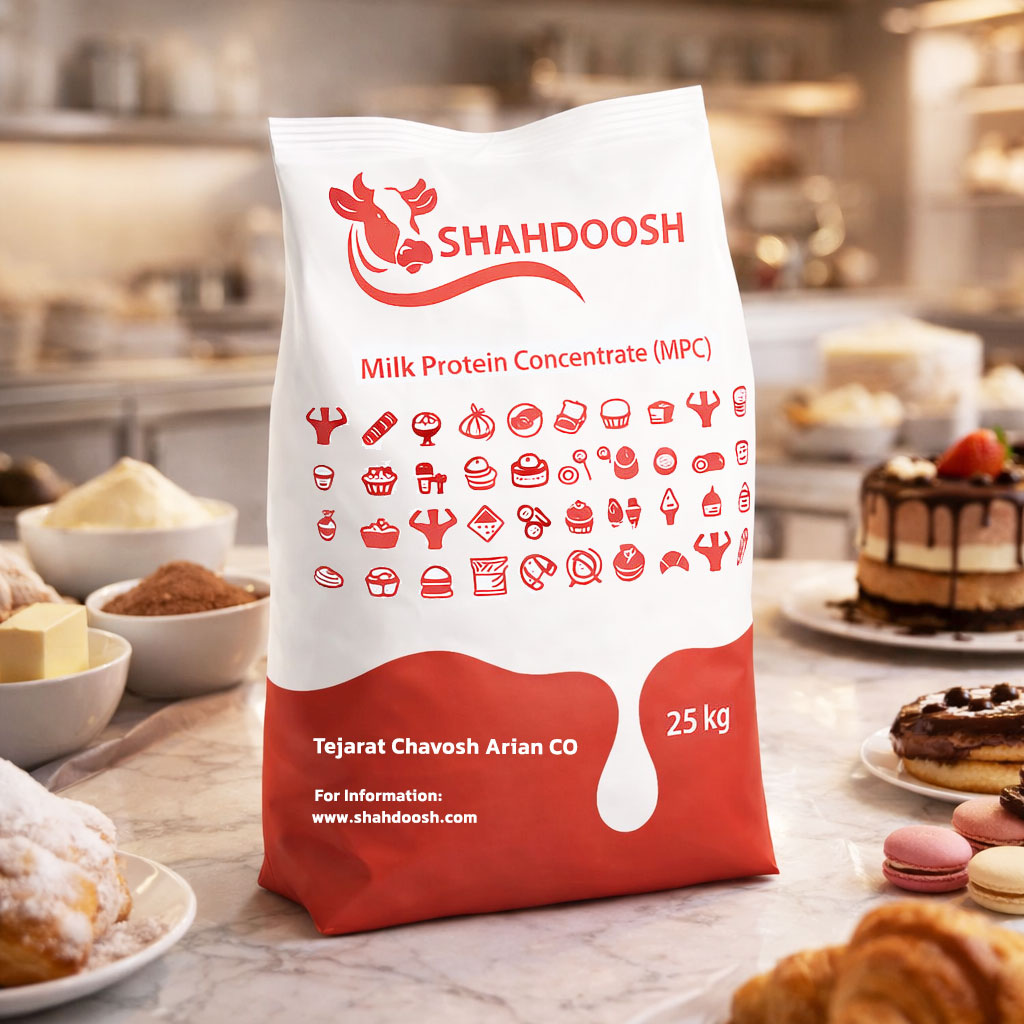
At Shahdoosh, milk powder is approached as a controlled system rather than a commodity. Every batch follows a defined technical journey—from analytical evaluation to real industrial application. This article explains that journey step by step, highlighting how quality is built, verified, and maintained throughout the production process.
Why the Journey Matters in Industrial Milk Powder
Many quality issues in food production do not originate in the factory itself. Instead, they begin with raw materials that look acceptable on paper but fail under real processing conditions. As a result, manufacturers face challenges such as unstable emulsions, poor solubility, sedimentation, or inconsistent texture.
Therefore, understanding the complete path of milk powder—from analysis to final use—is essential. A controlled journey reduces formulation risk, improves batch consistency, and protects brand reputation in competitive markets.
Step One: Raw Material Selection and Quality Foundations
The journey of Shahdoosh milk powder begins long before spray drying. It starts with the careful selection of raw milk sources that meet defined compositional and microbiological standards.
Key selection parameters include:
-
Protein consistency
-
Low microbial load
-
Stable mineral balance
-
Traceable sourcing
By establishing strict raw material criteria, variability is minimized at the earliest stage. Consequently, downstream processing becomes more predictable and controllable.
Step Two: Analytical Evaluation Before Processing
Before any production step begins, raw materials and intermediate products undergo analytical testing. This stage forms the technical foundation of quality control.
Core Analytical Parameters
The most critical analyses include:
-
Moisture content to ensure drying efficiency and shelf stability
-
Protein level and composition to support functional performance
-
Fat content (where applicable) for sensory and stability control
-
Ash and mineral balance to avoid solubility and flavor issues
Rather than treating these values as mere numbers, Shahdoosh uses them to predict how the milk powder will behave during processing and in final applications.
Step Three: Controlled Heat Treatment Strategy
Heat treatment is one of the most decisive factors affecting milk powder functionality. It directly influences protein behavior, solubility, water binding, and heat stability.
Depending on the intended application, Shahdoosh milk powder may follow different heat treatment profiles:
-
Low-heat processing to preserve protein solubility
-
Medium-heat treatment for balanced functionality
-
Higher heat exposure when enhanced water binding or structural stability is required
By aligning heat treatment with application needs, functional performance is engineered rather than left to chance.
Step Four: Spray Drying and Particle Formation
Spray drying transforms liquid milk into a stable powder form. However, this step does far more than remove moisture. It defines particle size, surface properties, and rehydration behavior.
During spray drying, careful control of parameters such as inlet temperature, outlet temperature, and airflow ensures:
-
Uniform particle structure
-
Controlled bulk density
-
Reduced fines and dust
-
Improved flowability
As a result, the powder performs consistently during handling, transport, and industrial dosing.
Step Five: Functional Testing Beyond the COA
A certificate of analysis (COA) is necessary—but not sufficient. Real performance must be verified through functional evaluation.
At this stage, Shahdoosh milk powder is assessed for:
-
Solubility and dispersibility
-
Hydration speed
-
Stability in liquid systems
-
Behavior under heat and shear
These tests bridge the gap between laboratory analysis and real production conditions. Therefore, potential issues are identified before the powder reaches the customer’s production line.
Step Six: Performance in Industrial Applications
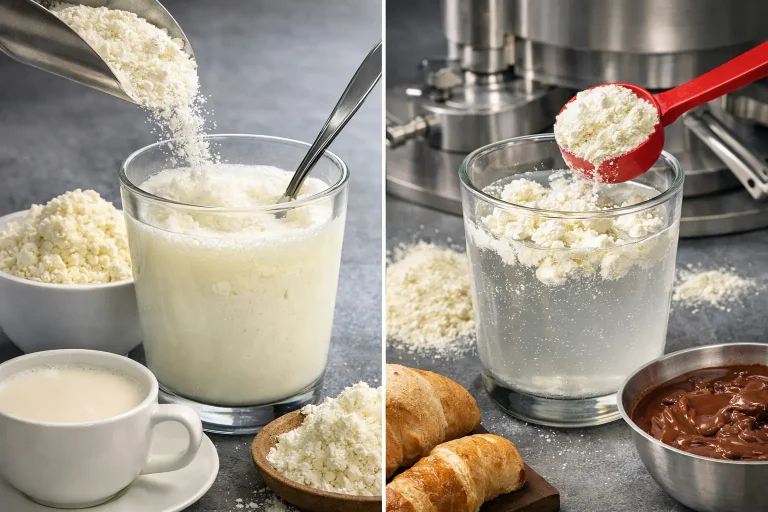
The true value of milk powder is revealed during application. Whether used in beverages, recombined dairy, bakery, or industrial food systems, consistent behavior is essential.
In practical use, Shahdoosh milk powder is designed to deliver:
-
Predictable viscosity development
-
Stable emulsions
-
Minimal sedimentation
-
Reliable sensory outcomes
Because functional performance has been engineered throughout the journey, manufacturers experience fewer formulation adjustments and lower production risk.
Step Seven: Batch Consistency and Traceability
Industrial buyers do not evaluate milk powder based on a single batch. Long-term consistency is what builds trust.
To support this, Shahdoosh emphasizes:
-
Batch-to-batch analytical comparison
-
Full traceability documentation
-
Historical performance tracking
As a result, customers can rely on stable specifications over time, even in volatile dairy markets.
Step Eight: Packaging, Storage, and Logistics Control
Quality does not end at production. Packaging and logistics play a critical role in preserving functional integrity.
Shahdoosh milk powder is packed to protect against:
-
Moisture absorption
-
Oxygen exposure
-
Mechanical damage during transport
Additionally, storage and logistics guidelines are aligned with product sensitivity, ensuring that functionality remains intact until final use.
Step Nine: Feedback Loop from Market to Production
One of the most important—but often overlooked—steps in the journey is feedback. Performance data from customer applications is analyzed and used to refine future production.
This continuous feedback loop allows Shahdoosh to:
-
Improve functional alignment
-
Adjust processing parameters
-
Support customer-specific applications
In this way, quality evolves with market needs rather than remaining static.
Why This Journey Creates Real Value for Industrial Buyers
From an industrial perspective, the value of this controlled journey is clear:
-
Reduced formulation risk
-
Faster product development
-
Lower rejection and rework rates
-
Stronger brand protection
Instead of reacting to quality problems, manufacturers gain a proactive and predictable ingredient partner.
Final Thoughts
Milk powder quality is not defined by a single test or specification. It is the result of a continuous, controlled journey that begins with raw material selection and ends with reliable performance in the final product.
By managing every step—from analysis to application—Shahdoosh positions milk powder as a functional solution rather than a simple ingredient.
In modern industrial food production, this approach is no longer optional. It is the difference between short-term sourcing and long-term success.