The Role of Milk Powder in Shelf-Stable Food Products
How Milk Powder Enables Long Shelf Life Without Compromising Quality
In today’s global food industry, shelf stability is no longer just a technical advantage — it is a commercial necessity. Manufacturers serving export markets, remote regions, or large retail chains must deliver products that remain safe, consistent, and appealing over extended periods. In this context, milk powder has become one of the most strategic dairy ingredients in modern food formulation.
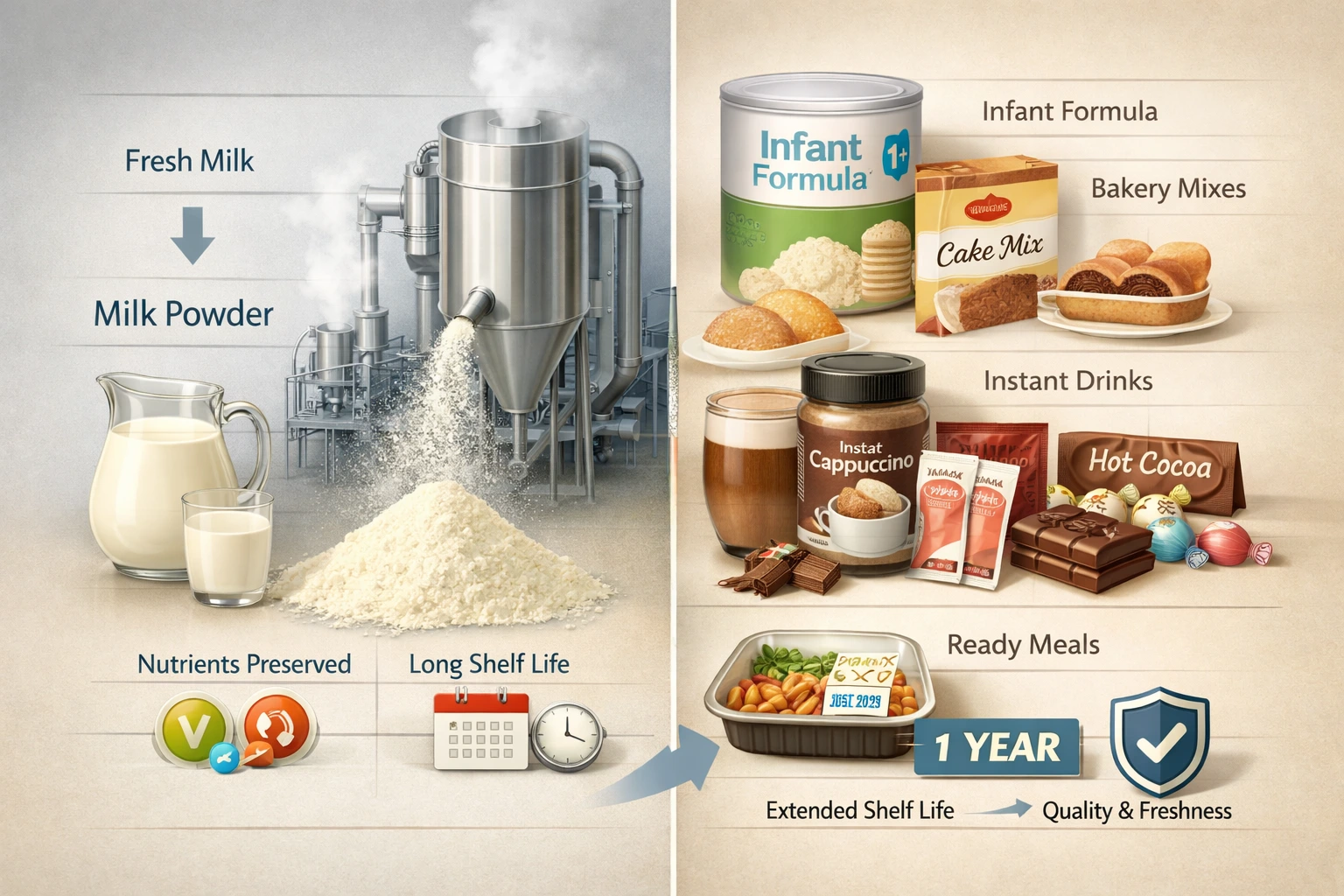
From ready-to-drink beverages and bakery goods to confectionery, sauces, and recombined dairy products, milk powder plays a critical role in extending shelf life while maintaining texture, flavor, and nutritional value. This article explores how milk powder contributes to shelf-stable food systems, examining its functional mechanisms, formulation benefits, economic impact, and application across multiple food categories.
Why Shelf Stability Matters in Modern Food Manufacturing
Shelf stability directly affects:
- Distribution reach and export capability
- Inventory management and waste reduction
- Retail flexibility and stock rotation
- Consumer convenience and trust
In regions with limited cold-chain infrastructure or long transportation routes, shelf-stable products are often the only viable option. Even in developed markets, extended shelf life reduces returns, shrinkage, and operational risk.
Dairy ingredients are traditionally associated with perishability. However, milk powder challenges this assumption by offering dairy functionality in a stable, dry, and controllable format.
What Makes Milk Powder Shelf-Stable?
Milk powder is produced by removing most of the water from fresh milk through evaporation and spray drying. This reduction in moisture is the key factor behind its stability.
Key characteristics that support shelf life include:
- Very low water activity, which limits microbial growth
- Heat treatment during processing, improving microbiological safety
- Dry, compact structure, reducing chemical and enzymatic reactions
When stored properly, it can remain stable for 12 to 24 months — a dramatic contrast to fresh milk.
Functional Advantages of Milk Powder in Shelf-Stable Formulations
1. Controlled Moisture Management
Moisture is one of the main drivers of spoilage in food products. Milk powder allows manufacturers to:
- Add dairy solids without increasing free water
- Precisely control water activity
- Reduce microbial risk and texture degradation
This makes it ideal for shelf-stable bakery mixes, dry blends, sauces, and instant products.
2. Consistent Protein and Lactose Contribution
In shelf-stable foods, consistency is critical. Variations in protein or sugar content can affect:
- Texture
- Browning reactions
- Flavor development over time
Milk powder provides standardized levels of protein and lactose, ensuring predictable performance batch after batch — regardless of season or milk source variability.
3. Heat Stability for Thermal Processing
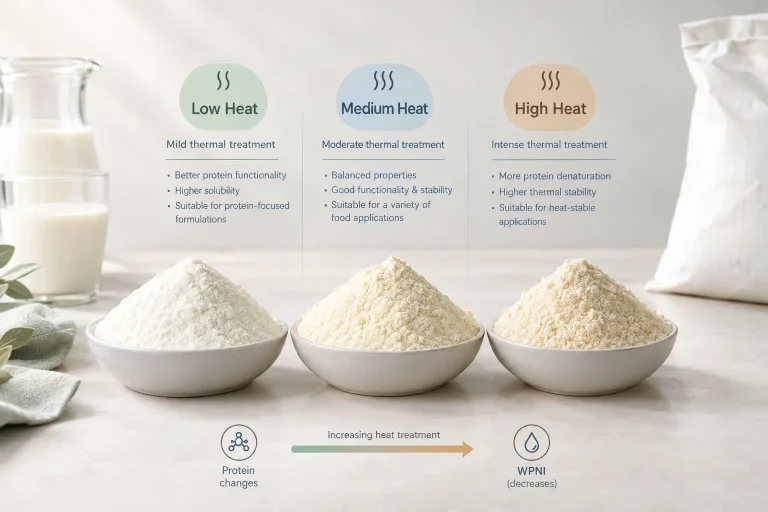
Many shelf-stable foods undergo aggressive heat treatments such as UHT, retorting, or high-temperature baking. Milk powder is available in different heat classes, allowing manufacturers to select ingredients that withstand these processes without destabilizing.
This is particularly important in:
- Shelf-stable dairy beverages
- Ready meals and sauces
- Long-life bakery products
Applications of Milk Powder in Shelf-Stable Food Categories
Shelf-Stable Dairy Beverages
Recombined dairy drinks, flavored milk, and nutritional beverages often rely on milk powder rather than fresh milk. Benefits include:
- Longer ambient shelf life
- Easier transportation and storage
- Precise control over solids and viscosity
It enables manufacturers to formulate products that remain stable without refrigeration until opening.
Bakery and Dry Mixes
In cakes, biscuits, bread mixes, and industrial bakery products, milk powder contributes to:
- Improved crumb structure
- Enhanced browning
- Extended freshness perception
Because it does not add water, milk powder helps preserve shelf stability while still delivering dairy functionality.
Confectionery and Chocolate
Chocolate, fillings, and confectionery products demand strict control over moisture and solids. Milk powder allows manufacturers to:
- Add dairy flavor and richness
- Maintain low water activity
- Prevent sugar bloom and texture defects
This is why dairy powder is preferred over liquid milk in shelf-stable confectionery.
Sauces, Soups, and Ready Meals
Milk powder is widely used in dry soup mixes, sauces, and ready meals where long shelf life is essential. It provides:
- Creaminess without refrigeration
- Stable emulsification
- Controlled rehydration behavior
Shelf Life vs Sensory Quality: The Balance
One concern often raised is whether shelf stability compromises taste or texture. When formulated correctly, milk powder supports both stability and sensory quality.
Key considerations include:
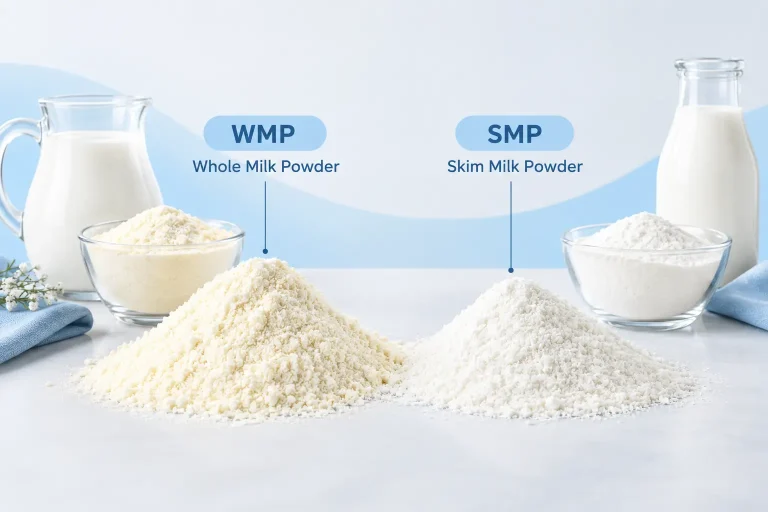
- Choosing the correct type (SMP, WMP, MPC, whey-based powders)
- Managing oxidation, especially in whole milk powder
- Using appropriate packaging with oxygen and moisture barriers
With proper formulation, shelf-stable products can deliver flavor and mouthfeel comparable to fresh alternatives.
Economic Impact of Using Milk Powder
From a cost perspective, milk powder offers several advantages:
- Reduced cold-chain costs
- Lower spoilage and waste
- Easier bulk purchasing and long-term contracts
- More predictable pricing than fresh milk
For export-oriented manufacturers or brands operating in volatile markets, this cost stability is a major strategic advantage.
Supply Chain and Logistics Benefits
Milk powder simplifies supply chains by:
- Allowing long-term storage without refrigeration
- Reducing transportation weight and volume
- Supporting global sourcing and distribution
This makes it particularly valuable for manufacturers serving multiple regions or international customers.
Food Safety and Regulatory Advantages
Low moisture and heat treatment make milk powder easier to manage under food safety systems such as HACCP, ISO, and GMP. Compared to fresh milk, it presents:
- Lower microbiological risk
- Easier traceability
- More stable quality during audits and inspections
These factors are crucial in large-scale, shelf-stable food production.
Sustainability Considerations
Shelf-stable products contribute to sustainability by reducing food waste. Milk powder supports this by:
- Minimizing spoilage
- Reducing energy use associated with refrigeration
- Improving transportation efficiency
When used strategically, it can be part of a more sustainable food system.
Common Challenges and How to Address Them
Oxidation in Fat-Containing Powders
Whole milk powder can oxidize over time.
Solution: Use proper packaging and antioxidants where necessary.
Rehydration Issues
Poor dispersion can affect texture.
Solution: Optimize mixing conditions or use instantized powders.
Flavor Drift Over Time
Extended storage may affect flavor.
Solution: Balance formulation and storage conditions carefully.
Final Thoughts: Milk Powder as a Shelf-Stability Enabler
Milk powder is far more than a convenient dairy substitute. In shelf-stable food systems, it is a foundational ingredient that enables long shelf life, consistent quality, and economic efficiency — without sacrificing functionality or consumer acceptance.
As global food markets continue to demand longer shelf life, wider distribution, and greater reliability, milk powder will remain a cornerstone of industrial food formulation.
For manufacturers seeking to balance quality, cost, safety, and scalability, milk powder is not just an option — it is a strategic asset.