The Importance of Proper Storage and Temperature Control for Dairy Powders
In the global dairy industry, powdered products such as milk powder, whey protein, whey permeate, and buttermilk powder play a critical role in food manufacturing, nutrition, and international trade. These products offer extended shelf life, ease of transportation, and formulation flexibility. However, despite their stability compared to liquid dairy, dairy powders are highly sensitive to environmental conditions. Their quality, safety, and functional performance depend heavily on how they are stored and handled after production.
Proper storage and temperature control are not minor operational details. On the contrary, they are core quality assurance factors that directly influence flavor stability, nutritional value, solubility, and microbiological safety. For dairy producers and exporters such as Shahdoosh, maintaining optimal storage conditions is essential to meet international standards, protect brand reputation, and deliver consistent product performance across global markets.
Understanding the Nature of Dairy Powders
To appreciate the importance of storage control, it is necessary to understand the physical and chemical nature of dairy powders.
Dairy powders are hygroscopic, meaning they readily absorb moisture from the surrounding air. This characteristic makes them highly vulnerable to humidity, condensation, and temperature fluctuations. Even small changes in environmental conditions can trigger quality defects that are often irreversible.
When exposed to moisture, dairy powders may:
- Clump or cake, losing free-flowing properties
- Develop off-flavors due to fat oxidation or microbial activity
- Experience reduced solubility and dispersibility
- Become a medium for mold growth if conditions are severe
In addition, dairy powders contain sensitive components such as proteins, lactose, fats, vitamins, and minerals, all of which can degrade over time if storage conditions are not properly controlled.
Therefore, storage is not simply about keeping products dry—it is about preserving structural, functional, and nutritional integrity throughout the product’s shelf life.
Ideal Storage Conditions for Dairy Powders
International dairy standards and food safety guidelines generally recommend storing dairy powders under cool, dry, and stable conditions.
Temperature Guidelines
For most dairy powders, including:
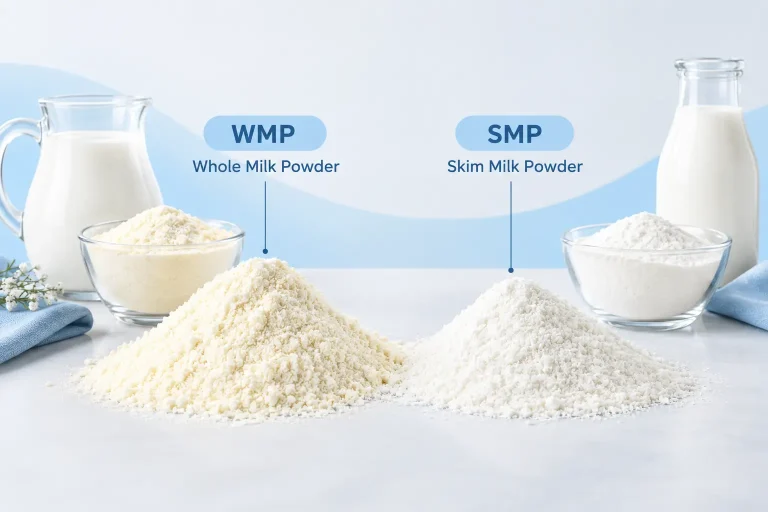
- Skim milk powder
- Whole milk powder
- Whey protein concentrate (WPC)
- Whey protein isolate (WPI)
The ideal storage temperature ranges between 20°C and 25°C.
Temperatures above this range accelerate chemical reactions, while temperatures below may cause condensation when products are moved between environments.
Humidity Control
Relative humidity should be kept below 65%, and ideally closer to 50–55% in industrial storage facilities.
High humidity is one of the most dangerous factors for dairy powders. Moisture absorption can occur even through packaging if the storage environment is poorly controlled. Once moisture enters the powder, it can trigger caking, microbial risk, and rapid quality deterioration.
Environmental Cleanliness
Storage areas must also be:
- Free from direct sunlight
- Isolated from strong odors and chemicals
- Protected from pests and contaminants
- Well-ventilated with controlled airflow
Dairy powders can absorb surrounding odors, which may result in unacceptable sensory defects, especially for products intended for infant formula or nutritional applications.
Temperature Control and Chemical Stability
Temperature plays a direct and measurable role in the chemical stability of dairy powders.
The Maillard Reaction
One of the most critical risks associated with high storage temperatures is the Maillard reaction. This reaction occurs when lactose reacts with milk proteins, especially at elevated temperatures and higher moisture levels.
The Maillard reaction can lead to:
- Browning or discoloration of powder
- Loss of essential amino acids such as lysine
- Reduced protein digestibility
- Decreased solubility and functional performance
For industries producing baby formula, medical nutrition, or sports supplements, even slight degradation can result in product rejection or regulatory non-compliance.
Fat Oxidation
In whole milk powder and fat-containing dairy powders, elevated temperatures accelerate lipid oxidation. This process produces rancid flavors, unpleasant odors, and reduced shelf life.
By maintaining stable and moderate temperatures, manufacturers can significantly slow down oxidation processes and preserve the natural flavor profile of dairy powders.
Packaging as a Critical Line of Defense
Even with optimal warehouse conditions, packaging plays a decisive role in protecting dairy powders from environmental exposure.
Barrier Properties
High-quality dairy powders should be packed in:
- Multi-layer laminated bags
- Materials with strong moisture and oxygen barriers
- Inner liners made of food-grade polyethylene or aluminum-based films
These materials prevent moisture ingress, oxygen exposure, and contamination during storage and transportation.
Modified Atmosphere Packaging
Advanced producers often use:
- Vacuum sealing
- Nitrogen flushing
These techniques reduce oxygen levels inside the package, slowing oxidation and extending shelf life. Shahdoosh, for example, applies modern packaging technologies to ensure that dairy powders remain stable from production to final delivery.
Storage Practices in Industrial and Export Environments
Large-scale storage and export operations face additional challenges due to volume, duration, and transportation conditions.
Warehouse Management
Industrial warehouses must ensure:
- Uniform temperature and humidity across all zones
- Continuous monitoring with calibrated sensors
- Alarm systems for deviations
- Regular inspection and documentation
In regions with hot or tropical climates, air conditioning and dehumidification systems are essential to maintain acceptable storage conditions year-round.
Inventory Rotation (FIFO)
Applying the First-In, First-Out (FIFO) principle is critical in dairy powder storage. Older batches should always be dispatched before newer ones to prevent excessive aging, even if products remain within shelf-life limits.
Proper stock rotation reduces waste, minimizes quality variation, and ensures consistent product performance for customers.
Consequences of Improper Storage
Failure to control temperature and humidity can result in serious consequences, both technically and commercially.
Quality Degradation
Improper storage may cause:
- Caking and hardening of powder
- Loss of instant properties and solubility
- Development of off-flavors and odors
- Discoloration and visual defects
Nutritional Loss
Sensitive nutrients, particularly vitamins A and D, degrade rapidly under heat and oxygen exposure. Protein quality may also decline due to chemical reactions, reducing nutritional value.
Financial and Brand Impact
From a business perspective, storage failures lead to:
- Product rejections and customer complaints
- Increased waste and disposal costs
- Regulatory issues in export markets
- Long-term damage to brand credibility
For premium dairy brands, maintaining storage integrity is inseparable from maintaining market trust.
Smart and Sustainable Storage Solutions
As the dairy industry evolves, smart storage technologies are becoming standard practice.
Digital Monitoring Systems
Modern facilities now use:
- Real-time temperature and humidity tracking
- Cloud-based monitoring platforms
- Automated alerts for deviations
These systems reduce human error and allow immediate corrective action, protecting both product quality and operational efficiency.
Energy-Efficient Design
Sustainable storage solutions include:
- Energy-efficient cooling systems
- Optimized warehouse insulation
- Reduced refrigeration loads through better logistics planning
Shahdoosh integrates environmental management strategies that balance product safety with sustainability, aligning with global environmental and quality standards.
The Strategic Role of Storage in Dairy Quality Management
Proper storage and temperature control should be viewed as part of a broader quality management system, not a standalone activity. Storage conditions influence every downstream application—from reconstitution and processing to final consumer experience.
For manufacturers, this means:
- More consistent product performance
- Higher customer satisfaction
- Reduced operational risk
- Stronger positioning in international markets
In competitive global dairy trade, storage excellence is not optional—it is a strategic advantage.
Conclusion
Proper storage and temperature control are fundamental to preserving the integrity, safety, and value of dairy powders. Whether the product is milk powder, whey protein, or buttermilk powder, maintaining optimal environmental conditions ensures long shelf life, stable functionality, and reliable nutritional quality.
For leading dairy producers such as Shahdoosh, excellence in storage management is more than a technical requirement. It is a commitment to quality, safety, sustainability, and customer trust. By investing in controlled environments, advanced packaging, and smart monitoring systems, dairy companies can ensure that every batch delivered to the global market meets the highest standards—today and in the future.